
June has tried its very best to win the most challenging month of the year so far, and mostly succeeded. Reading has taken a bit of a back seat to reality for a while. Even my reading for this month didn’t take me away to wondrous fairy-tale lands and kept me grounded in real world issues. So, I’ll keep the intro as dry and lacking in motivation as the month has been for me! Here are some book reviews of some good book recommendations that tried their best to salvage the month for me.
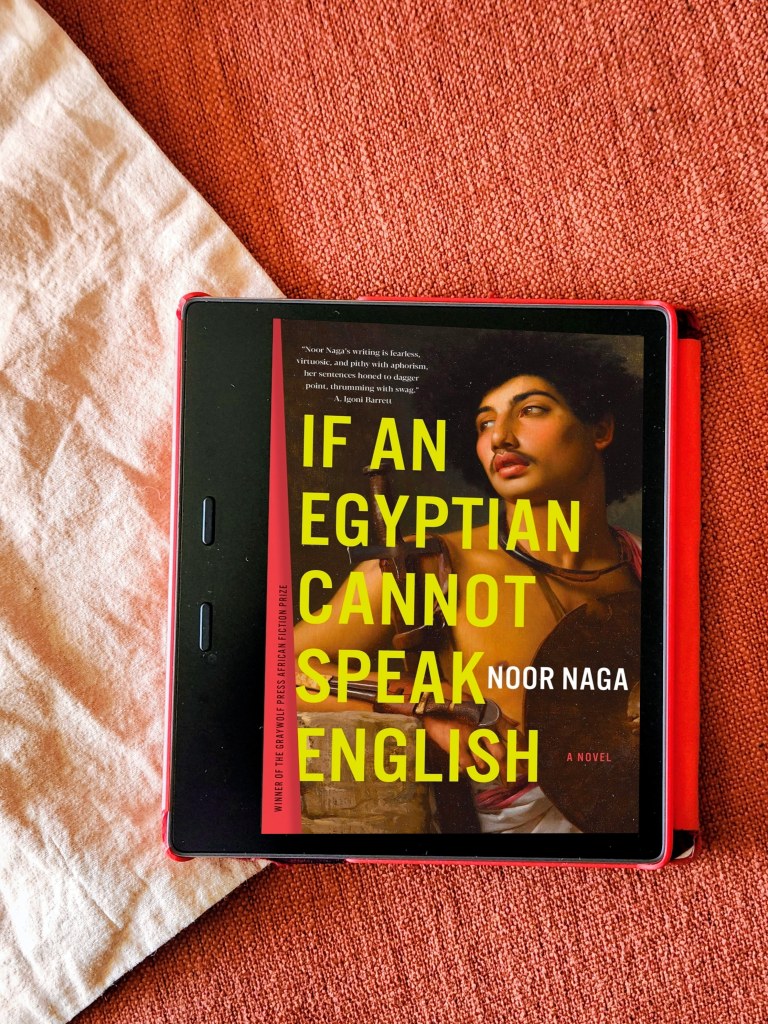
If an Egyptian Cannot Speak English by Noor Naga
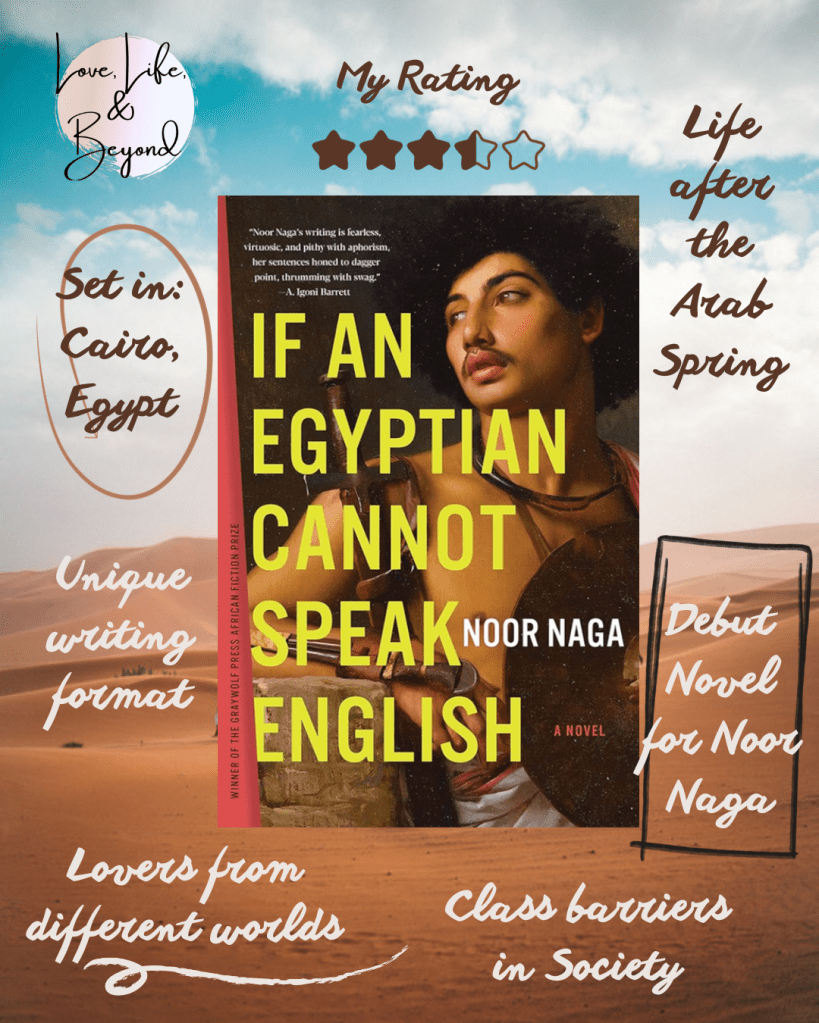
It is a uniquely written book: The format of story telling changes in each of the 3 parts but it is the third part that made me see the book in a different light.
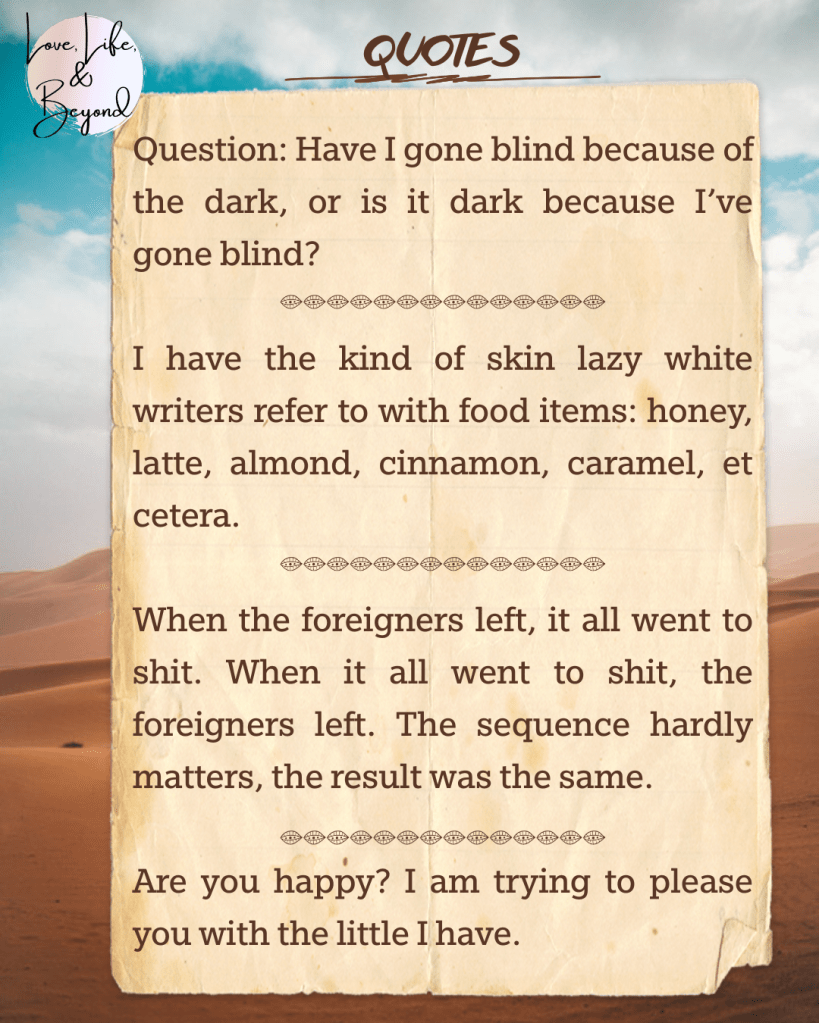
We shift between two POVs: the American Girl and the Boy from Shobrakheit. The chapters in Part 1 all start with an insightful question. In an interview, the author said it was part of her writing process to question the content of her chapters and she decided to keep it in. They are all phrased in an interesting way, and I had to read a few of them twice to take in the meaning. (Question: Have I gone blind because of the dark, or is it dark because I’ve gone blind?)
She is from a rich immigrant family in America and wants to explore her roots, so she comes to Cairo and works as an English teacher. She talks about her life in America where she prided herself on being an activist but it was mostly for online clout. In Egypt, she keeps her head shaved, which makes her stand out but she wants to blend in. Although She says she is in Egypt to get to know her roots, she doesn’t really mingle with the locals, only the rich set of friends who are insulated from it all. Her life shows us the contrasting lives of the residents in the city.
He is from a small town but has lived through the Arab Spring days in Cairo and is unable to come to terms with the vast gap between expectation and reality. So, he takes to using drugs. He talks about the Westerners who came to cover the revolution and left as abruptly as they came. He was raised by his grandmother, and it is a touching backstory for Him. His inner turmoil is difficult to witness, and his attempts at poetry are beautiful.
When they meet, the differences are vast, but each looks to the other in search of what is missing in themselves; the power dynamics shift between the two at different points of the story. But how can a relationship survive such a wide gap?
Apart from the relationship, it is interesting to think about the differences in thoughts and actions in different parts of the world; what She tolerated in a relationship in Egypt is not the same as what she would expect in America. Toward the end things take a turn and we’re made to confront our feelings on it and also the story telling.
When the foreigners left, it all went to shit. When it all went to shit, the foreigners left. The sequence hardly matters, the result was the same.
- Verdict: Read if you’re feeling adventurous
- Rating: 7/10
- Genre: Fiction
- Format: Ebook
- Pages: 205
- Country: Egypt
- About: Noor Naga is a Canadian-Egyptian writer. She has received numerous accolades, including the Center for Fiction’s First Novel Prize and two Arab American Book Awards. Her acclaimed works include the verse-novel Washes, Prays, and her debut novel, If an Egyptian Cannot Speak English. Her first memoir, Third Person, is forthcoming from Graywolf Press in 2027.
Taiwan Travelogue by Yáng Shuāng-zǐ (Translated by Lin King)
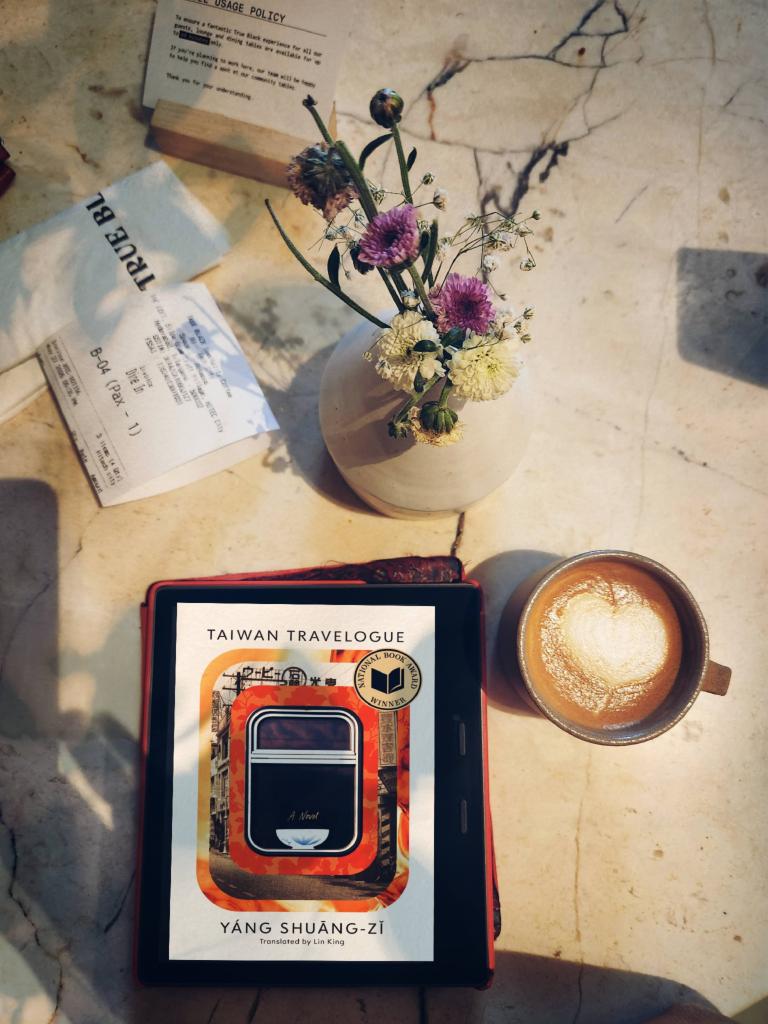
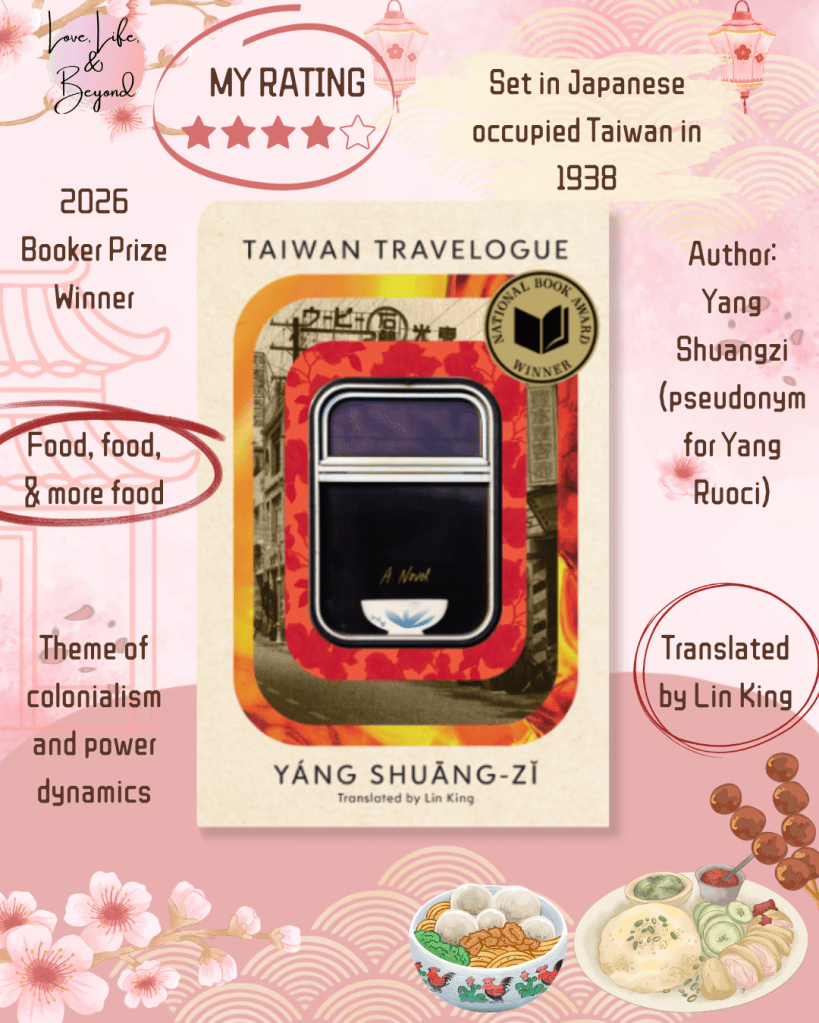
Fair warning: Do not read on an empty stomach. It is 1938. Aoyama is a Japanese writer with a voracious appetite. She is commissioned to travel to Taiwan (colonised by Japan at the time) and write a series of travel essays for Mainlanders, which is basically propaganda. She has a different theme in mind. She wants to “eat our way across all of Taiwan Island!”
She is assigned a translator and a guide at arrival, Mishima. He has been given a brief by the agency and refuses to deviate from the assignment, much to the frustration of Aoyama who just wants a taste of the local delicacies.
A chance encounter brings Chizuru into her life as a replacement translator, who not only understands her monstrous appetite, but also indulges it, and partakes in it. Nothing could be a better match and Aoyama insists on treating her like an equal and a friend. However, she notices the Noh mask that Chi-Chan (as Aoyama fondly calls Chizuru) has around her. Why can’t she let down her guard and accept her warm friendship? What is she hiding? Will Aoyama get to the bottom of the conundrum before it’s too late?
It’s an endearing story about female friendship centered around food. (There are subtle hints at a queer romance but I did not find anything overt moving beyond the realms of friendship.) The many tantalising food descriptions will make you want to book the next flight to Taiwan! However, toward the end, I found myself skipping over some of the food lists. Also, there are numerous footnotes that distract from the main story; they could’ve been reduced to only the essentials. Of course, the whole idea of the book is based on translation, and the footnotes mention which translator has made the note.
I also loved the self-realisation that Aoyama comes to and the ensuing commentary on imperialism and power dynamics. It reminds the reader that even the best of intentions can come with an unconscious bias.
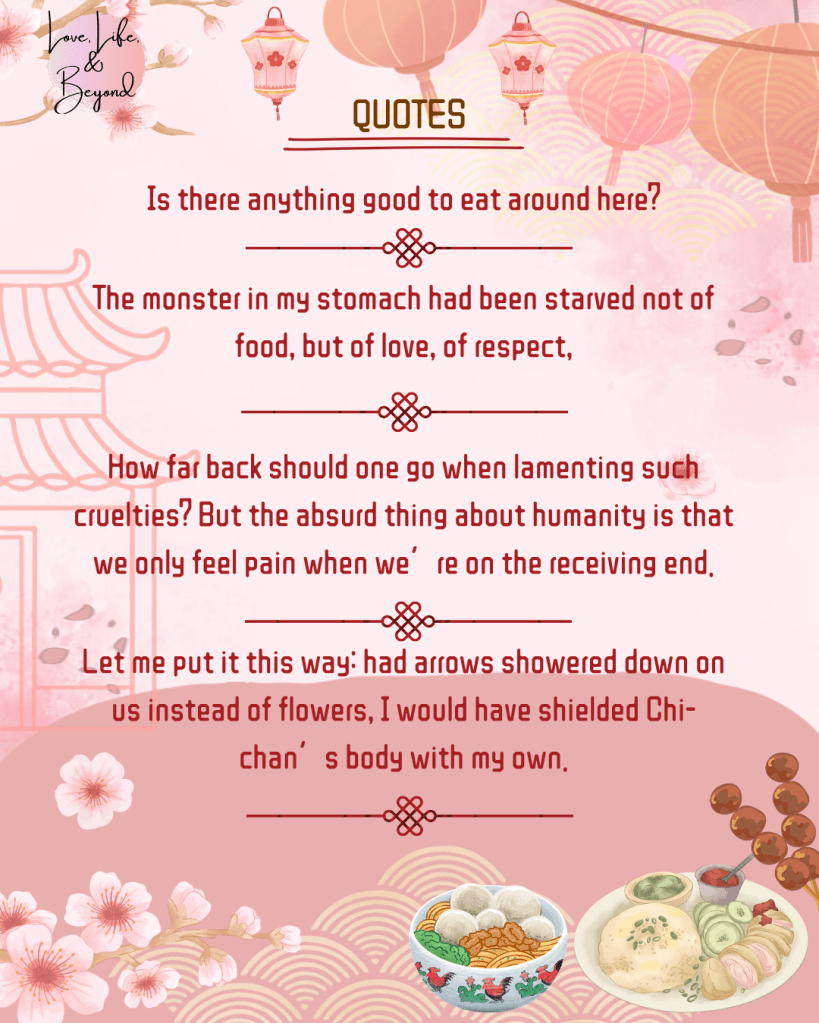
The monster in my stomach had been starved not of food, but of love, of respect.
- Verdict: Read
- Rating: 7/10
- Genre: Fiction
- Format: Ebook
- Pages: 318
- Country: Taiwan
- About: Yang Shuangzi is a Taiwanese novelist and researcher into popular literature and subculture. Her real name is Yang Ruoci; Yang Shuangzi (meaning twins) is the pseudonym shared by her and her twin sister, Yang Ruohui. Around 2008, the twins became fascinated by ‘lily’ or ‘girls’ love’ fiction, and Yang Shuangzi wrote her first fan fiction. A year after Yang Ruohui’s death in 2016, Yang Ruoci published her first ‘lily’ novel The Man Who Caught the Moon under the pen name of Yang Shuangzi. Since then she has continued to write and publish novels and short stories set in Taiwan during the Japanese Occupation. Taiwan Travelogue won the 2026 International Booker Prize.
Em and the Big Hoom by Jerry Pinto
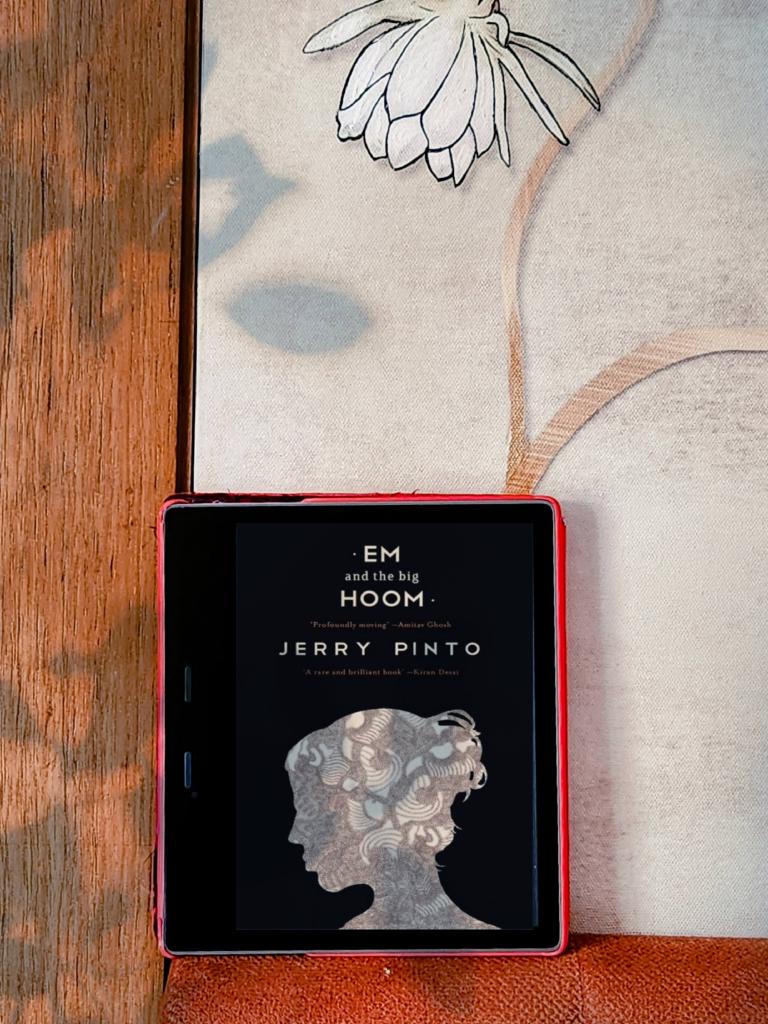
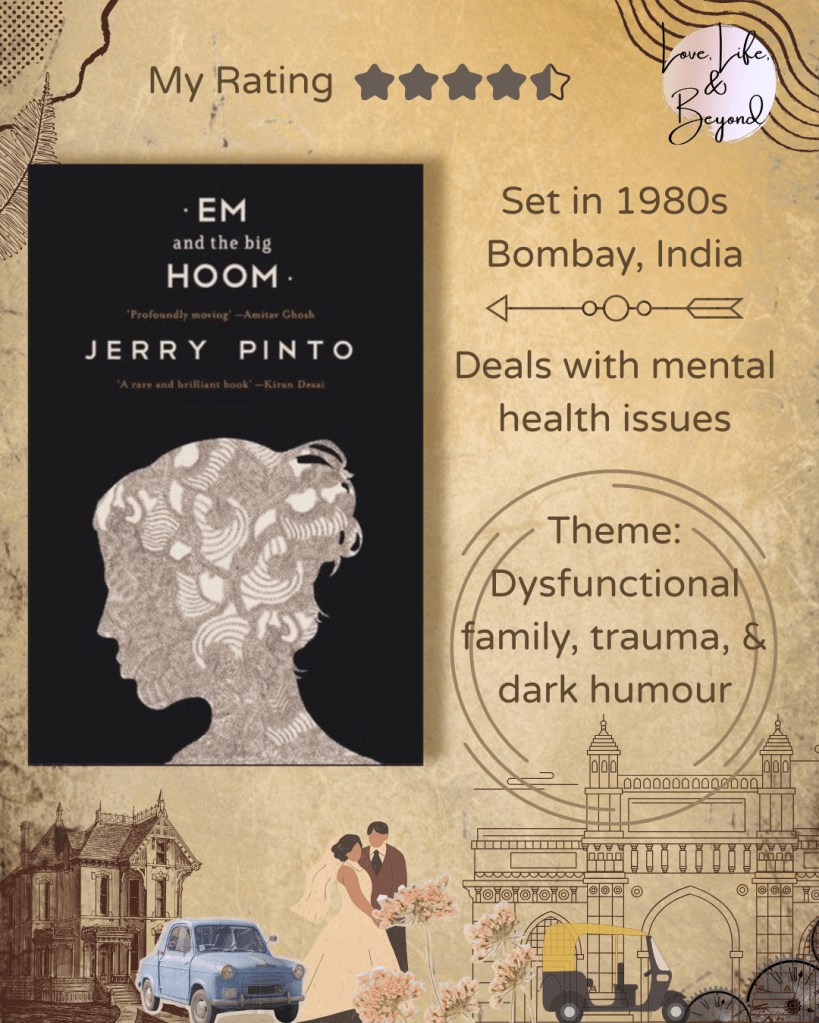
Em and the Big Hoom feels like a deeply personal, lived-in experience of love, madness (pun not intended), and the exhausting reality of a dysfunctional family.
The novel tackles the immense weight of living with someone dealing with manic depression; especially when that someone is a parent who has attempted suicide on multiple occasions. It is a heavy, heartbreaking reality to read about, but what struck me most is how everyone in the family finds their own way to deal with it. There is the Big Hoom, the father, who takes it all incredibly stoically, acting as the quiet, steady anchor in their chaotic 1BHK. Then there is the narrator, who openly shares his own up and down moments as he navigates the emotional turbulence of loving his mother while trying to keep his own head above water.
Em herself is an absolute force of nature. Her quirkiness and brutal, unfiltered honesty are deeply endearing to read. I found myself smiling at her eccentricities and the sheer force of her personality. But at the same time, as a reader, I could completely understand just how profoundly frustrating and draining it would be for her children, who are constantly forced into the position of having to parent their own mother.
Interspersed through the chaos of their present are flashbacks of Em’s earlier life. We get these beautiful glimpses of how she met and married the Big Hoom. And as a backdrop to all of this, the setting is practically its own character. I could feel the Bombay of the 80s emanating from the pages.
It is a heavy read, yes, but also remarkably full of warmth and dark humor.
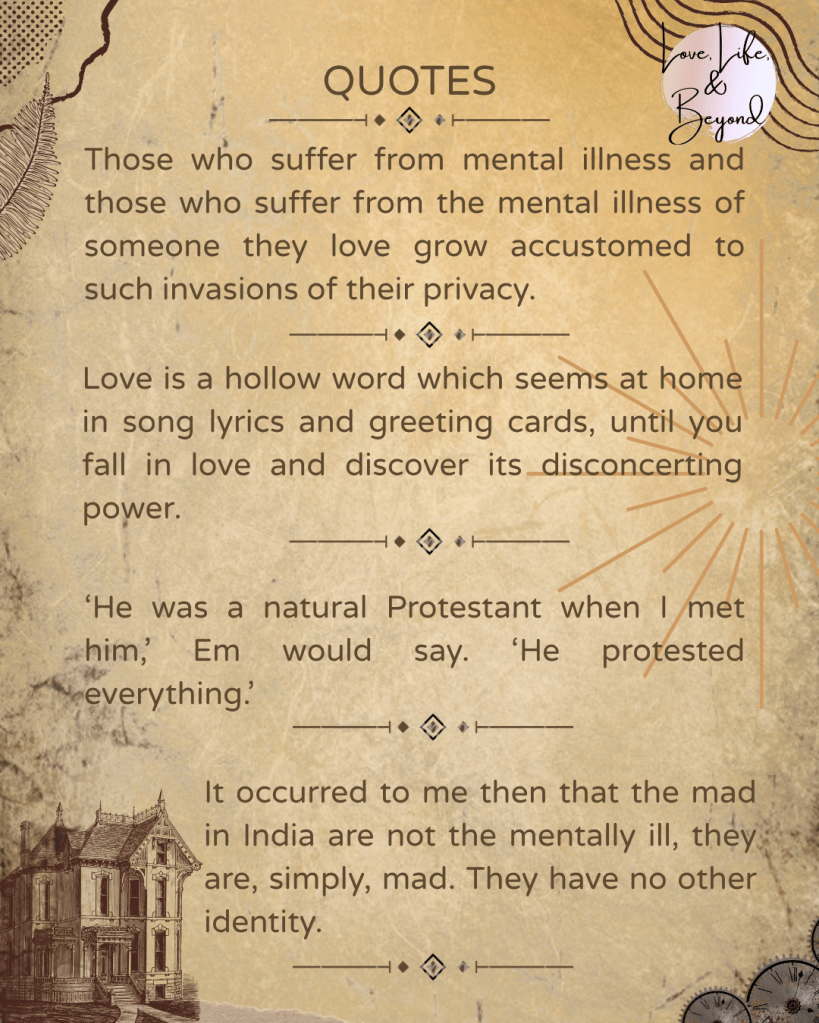
It occurred to me then that the mad in India are not the mentally ill, they are, simply, mad. They have no other identity.
- Verdict: Must Read
- Rating: 8/10
- Genre: Fiction
- Format: Ebook
- Pages: 238
- Country: India
- About: Jerry Pinto has had an eclectic career path. He began as a maths tutor, then moved to journalism, writing scripts for TV and audio-documentaries, editing a travel magazine, and now a published author, and guest lecturer at colleges. His 2006 book, Helen: The Life and Times of an H Bomb was a study of Bollywood’s gender and race politics as well as an affectionate examination of a dancing legend. The book won the National Award for the Best Book on Cinema. He is on the board of directors of MelJol, an NGO that works in the child rights space.
An Astronomer’s Tale by Gary Fildes
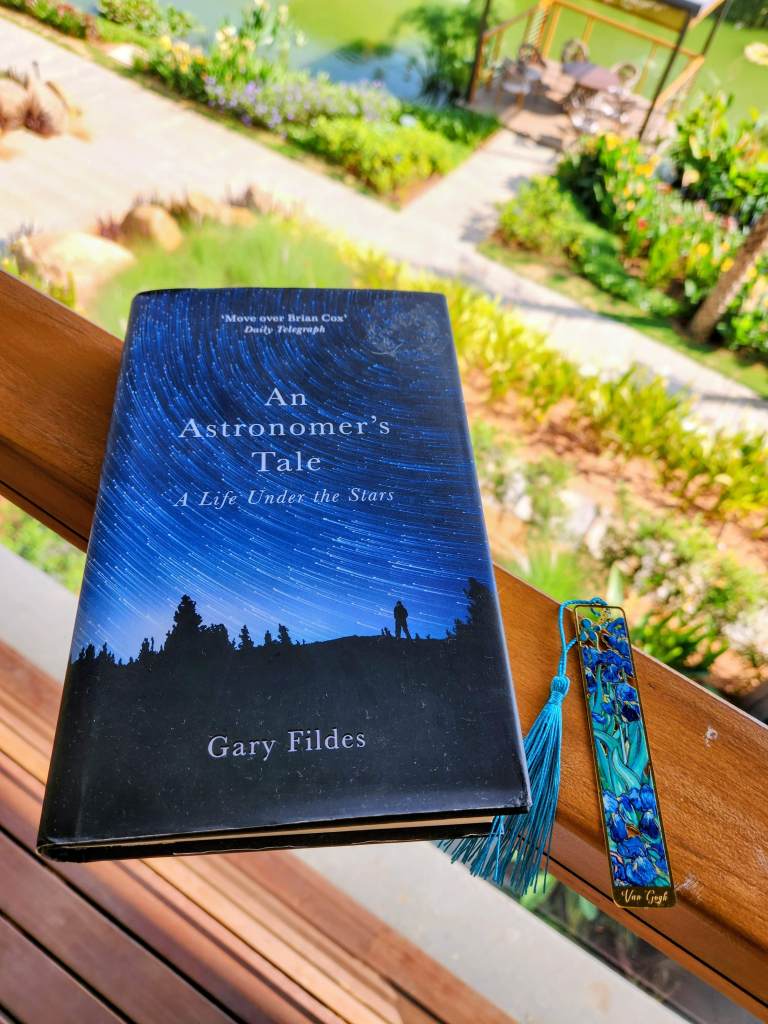
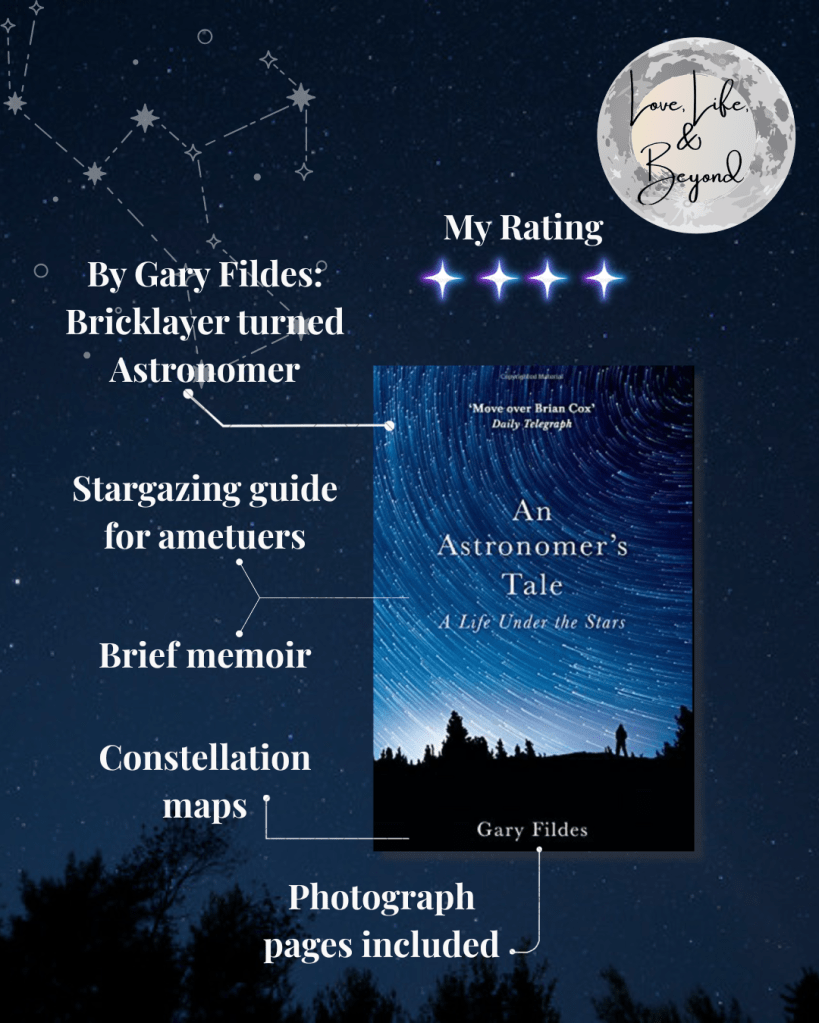
I didn’t know quite what to expect when I started this book, but it ended up being a nice grounding read, with a beginner’s guide to reading the skies. We often think of passions—especially scientific ones—as paths we must commit to early in life, or else we miss the boat. This book beautifully dismantles that idea.
Gary Fildes left school at sixteen, learned a trade as a bricklayer, got married, and had four kids. From the outside, his life seemed completely set. But he harboured a secret obsession with the night sky, something he only pursued late at night with a few like-minded friends. Approaching middle age, he finally decided to embrace his lifelong passion and “come out” as an astronomer. The journey that follows is inspiring. He is the founder of Kielder Observatory, one of the top stargazing sites in the world.
The book is part memoir, part nature writing, and part seasonal guide to the night sky. It makes the universe feel completely accessible, even if you normally feel the scientific bits might go straight over your head.
It is a simple but moving tale that reminds us it is never too late to reinvent yourself. The bi-monthly stargazing guides woven into the chapters are a lovely touch, but unless you are stargazing while reading, it won’t make much sense.
The book made me miss the opportunity to step outside, find a dark patch of sky, and just marvel at the stars. Living in a city, in a country that’s one of the most polluted, these opportunities are only imaginary.
…like most things in life, a scope needs constant calibration to obtain the best results…
- Verdict: Read if you want to start navigating the night sky
- Rating: 7/10
- Genre: Non-Fiction, Biography
- Format: Hardcover
- Pages: 290
- Country: UK
- About: Gary Fildes is an amateur astronomer. Fildes was born in Sunderland, England. Growing up, he loved science but opportunities were few. He left school at the age of sixteen to work as a bricklayer. Not formally trained in astronomy or academia, in 2012 Fildes was given an honorary master’s degree from Durham University. He was the driving force in establishing Kielder Observatory. Currently he is working at Grassholme Observatory.
Note: Some links are part of an affiliate program, which means that if you click on a link and buy something, I might receive a percentage of the sale, at no extra cost to you.



Leave a comment