
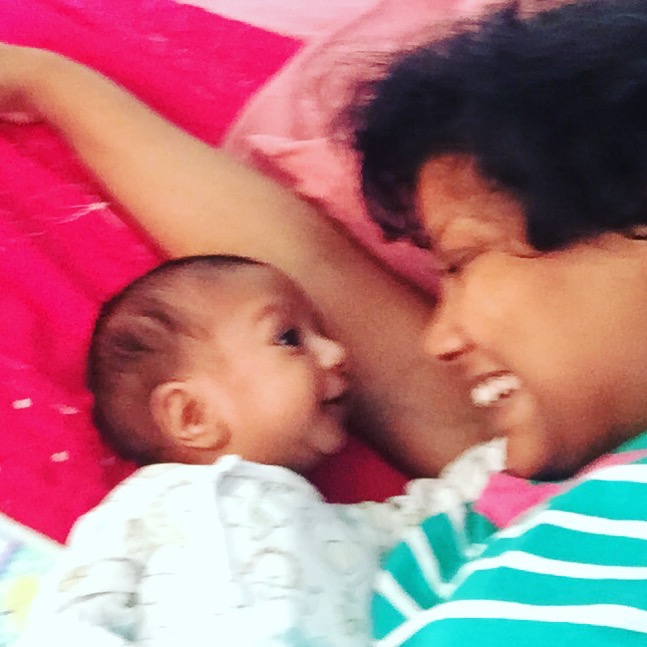
For a first time mom, it is a rollercoaster of emotions—excitement, anxiety, and everything in between. The thought of childbirth alone can be nerve-wracking, and then comes the overwhelming reality of caring for a newborn with a seemingly endless list of things to figure out. It’s a journey filled with uncertainties, and every new mom knows how daunting it can feel.
As my due date approached, I dove into endless research about life after birth, hoping to prepare myself for the whirlwind that was coming. Research is my way of finding calm in the chaos, and with a newborn on the way, I knew chaos was inevitable.
But there was one thing I didn’t research—breastfeeding. I just assumed it would be straightforward. “It’s the most natural thing in the world,” they said. “It’ll happen automatically,” they said.
Liars.
Little did I know, the breastfeeding experience would be one of the most challenging, surprising, and emotional parts of my postpartum journey.
Breastfeeding is not a natural talent
Breastfeeding challenges are not uncommon among new mothers. However, breastfeeding awareness is shockingly low.
Let’s start from the very beginning.
As soon as my baby boy was out and his vitals checked, he was handed to me for a quick suckle at the nipple. More of a comfort thing I was told, as the milk wouldn’t have come in yet.
Once we were settled in our room, the nurse had to guide me on the correct breastfeeding position. Babies might suckle at the breast, but they don’t extract milk from them if not latched properly. You need to guide them; hold them at a certain angle; and wake them up to continue nursing if they fall asleep mid way. And you need to do this every two hours from the time you started nursing…not two hours from when you ended your breastfeeding session.
My son’s weight was lower than average and therefore everyone was worried he wasn’t getting enough milk from me.
Step one was to check if I was producing enough milk. My breasts did not leak with milk (as some women’s do just at the thought of their babies), they gave me a breast pump which didn’t extract more than a few spoonfuls, and the baby would be crying again soon after a round of feeding. Conclusion: NO…not enough milk at all.
I later discovered that many of the things I believed were breastfeeding myths—even some doctors don’t fully understand them. For instance, you don’t need to leak milk or painfully extract large amounts with a pump to know you’re producing enough for your baby. The key is simple: nurse more often to signal your body to produce more milk. Instead of stressing over output, consult your pediatrician to understand how many wet diapers your baby should have each day—this is a much better indicator of healthy milk intake.
Breastmilk or Formula?
Breastmilk or formula? It’s one of the first big decisions new parents face, and there’s no one-size-fits-all answer. Breastmilk offers natural antibodies and nutrients tailored to your baby, while formula provides a convenient and balanced alternative for those who can’t or choose not to breastfeed. Ultimately, the right choice is the one that works best for your baby’s health and your family’s well-being. Fed is always best!
Everyone wanted me to supplement with formula as my baby was not the quintessential chubby baby. I didn’t want to, but didn’t think I had much of a choice. I tried to get my baby to latch on properly, got a breastfeeding pillow for support, and got a breast pump so that I could extract whatever little I could and give him that instead of formula.
I felt like a failure. Why couldn’t I feed my baby? The benefits of breastfeeding are astounding and I wanted my baby to have all the advantages it provided. But everyone around me just heard him crying all day and fed him bottles of formula milk. When he would fall asleep immediately after, they’d be vindicated. See? They’d tell me. Now his tummy is full so he’ll sleep well.
Getting back your mojo
It took about a month for me to regain some of my strength post partum—both physically and emotionally—and begin to feel a tiny bit more confident as a parent. But once I started to find my footing, I turned to the one thing that always helps me feel more in control: research. I dove into articles and forums, determined to better understand my baby’s needs, my own postpartum journey, and how to navigate this overwhelming new chapter of life. Little by little, the pieces began to fall into place.
KellyMom is the best resource for every new parent. Another thing that really helped me was a support group for breastfeeding moms on Facebook (Breastfeeding Support for Indian Moms). Look for support groups in your localities, online or in person. It makes you feel less lonely on this journey and you get some pro tips.
Busting some breastfeeding myths
Listed below are some of my learnings. I’ll try to avoid an angry rant as I relive those moments.
- Just because your breasts don’t leak with milk, or the pump is unable to extract enough milk from them, doesn’t mean you are not producing enough. The only way to know if the baby is getting enough milk is to see the number of wet (and heavy) diapers in a day. At least 4 to 5. If not, check if the baby is latching properly before blaming your milk production.
- Babies cry. It’s how they communicate. They’ve just entered a scary world and apart from food, they need comfort. Boobs provide food and comfort. Long after they’re done feeding, babies will continue to suckle for comfort. My baby loved to suckle for comfort. In fact, he continued to suckle at night to help him sleep till he was 18 months old and I had stopped producing milk.
- The formula that he was being fed through a bottle was way too much. Babies don’t know how to remove the bottle, or even that they need to. He was overfed, which tired him out. He slept but it also gave him gastric issues. He would be gassy and cranky every evening. And what would everyone do to calm him? Give him another bottle.
- Like adults, all babies are different and so are their weights. The average weight of a baby is different in each region and depends on a variety of factors. A better indicator of health is if your baby is active and not showing any signs of lethargy and deficiencies. Mine was perfectly healthy. He was just not the chubbiest of the lot. The number of times I’ve rolled my eyes at someone saying how weak he looked!
Tips for breastfeeding
Meanwhile, to increase my supply of milk, I let my baby suckle all day and night. For a week, literally every hour I would take him to nurse. I was co-sleeping with him so he’d nurse at night too. The increased suckling lets your body know it needs to produce more milk.
When he wasn’t suckling, I tried pumping whatever little could be extracted. It took a month, but he was finally off the formula milk.
Some other things I tried that might have helped are, staying hydrated, maintaining a balanced diet rich, skipping feedings, and practicing skin-to-skin contact with your baby.
Remember, every breastfeeding journey is unique, and progress takes time. Consistency, patience, and a supportive environment can make all the difference.
It was not an easy journey and there was no one around me who could support me. The paediatrician didn’t know much about breastfeeding basics (which I thought was a shocking gap in the medical syllabus). They just focussed on the weight. Most mothers around me never spoke about their breastfeeding struggles, if they had any. My own mother was told to switch to formula in the 1980s as it was a ‘healthier’ option (look up the evil that is Nestlé).
I am forever grateful to live in the time of technology that allows me to have such a reserve of information at my fingertips.
Rantings of a breastfeeding mother
My husband, who is super supportive otherwise, had even less of a clue than me so, he just focussed on what the doctor said. He insisted we need to get his weight up. Just look how chubby my nephew was!
I felt so grateful for the access to information that is so readily available to me. If not for the Internet, I’d have given up completely on trying to breastfeed, as I’m sure so many women have.
I continued to breastfeed till he weaned himself off at around 18 months. I side-slept on one side so he could latch on without waking me up. (I ended up with lopsided breasts because of it, so make sure to switch sides people!)
Breastfeeding on demand was tough. I felt like a dairy cow, always available with a boob out. I was always so touched out that I couldn’t stand it if anyone else touched me. But, I was glad I could endure it for those few months. It helped me develop a bond with my baby and I was happy he found his comfort in my arms.
I would like to add that not all women can breastfeed. Some don’t produce milk, and for some it’s very painful to breastfeed a baby. Even those who can, sometimes chose not to. Let’s not make women feel as if they’re not doing their jobs if their bodies don’t respond as expected. Listen to them and support their choices.
End of rant.





 Love, Life, & Beyond
Leave a reply to On Persistence | Love, Life, & Beyond Cancel reply