

I love an action-packed thriller, but sometimes you want to cosy up in your seat instead of being at the edge of it. The Bangalore Detectives Club Series by Harini Nagendra is a compelling blend of mystery and cultural richness. Set in the pre-Independence era and led by a female protagonist, Kaveri, it brings into focus many socio-political issues prevalent at the time.
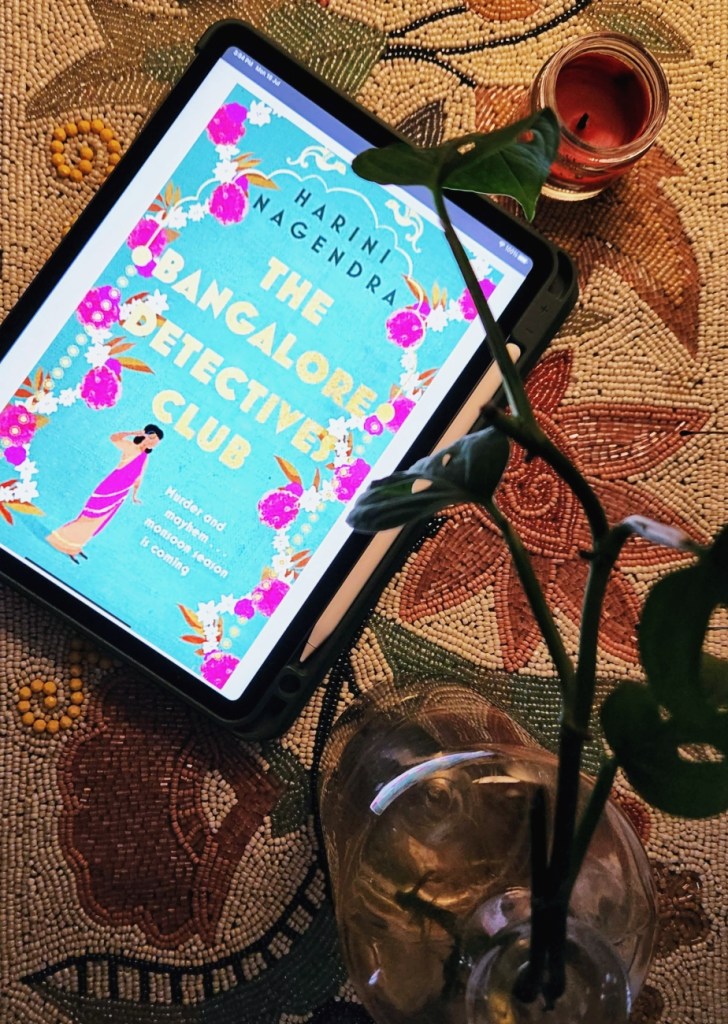
The Bangalore Detectives Club takes you into 1920s colonial India where the vibrancy of Bangalore comes alive through a blend of intriguing mysteries in each book, rich historical context, and vividly drawn characters. The series has three captivating books so far, and they present an intelligent and refreshing take on the amateur detective genre, with a unique cultural backdrop that sets it apart.
The Author: Harini Nagendra
Harini Nagendra is an esteemed Indian author and academic known mostly for her non-fiction work in ecology and sustainability. The Bangalore Detectives Club books are her first foray into fiction writing.
Harini has a PhD in ecological sciences and is a professor at Azim Premji University in Bangalore. Her research often focuses on the relationship between urbanisation and ecology, particularly in the context of Indian cities.
She is internationally recognised for her scholarship on sustainability, with honours that include the 2009 Cozzarelli Prize from the US National Academy of Sciences, the 2013 Elinor Ostrom Senior Scholar Award, and the 2017 Clarivate Web of Science Award for interdisciplinary research in India.
Her series of novels not only entertain but also take on important social issues such as feminism, the Indian independence movement, and social inequalities.
Book Review of The Bangalore Detectives Club Series
The series opens with The Bangalore Detectives Club (BDC), introducing us to Kaveri Murthy, a young and sharp-minded woman recently married to a doctor, Ramu. She’s trying to adjust into her new life in the big city, disappointed that she couldn’t continue her studies instead.
Kaveri’s life takes an unexpected turn when she stumbles upon a murder at a party. With an insatiable curiosity and a keen sense of justice, she embarks on a quest to solve the crime to help a poor woman who would undoubtedly be blamed for it. As more women join in to help in various ways, thus begins the adventures of the Bangalore Detectives Club. Here’s my review of the first book: Book Review of The Bangalore Detective’s Club
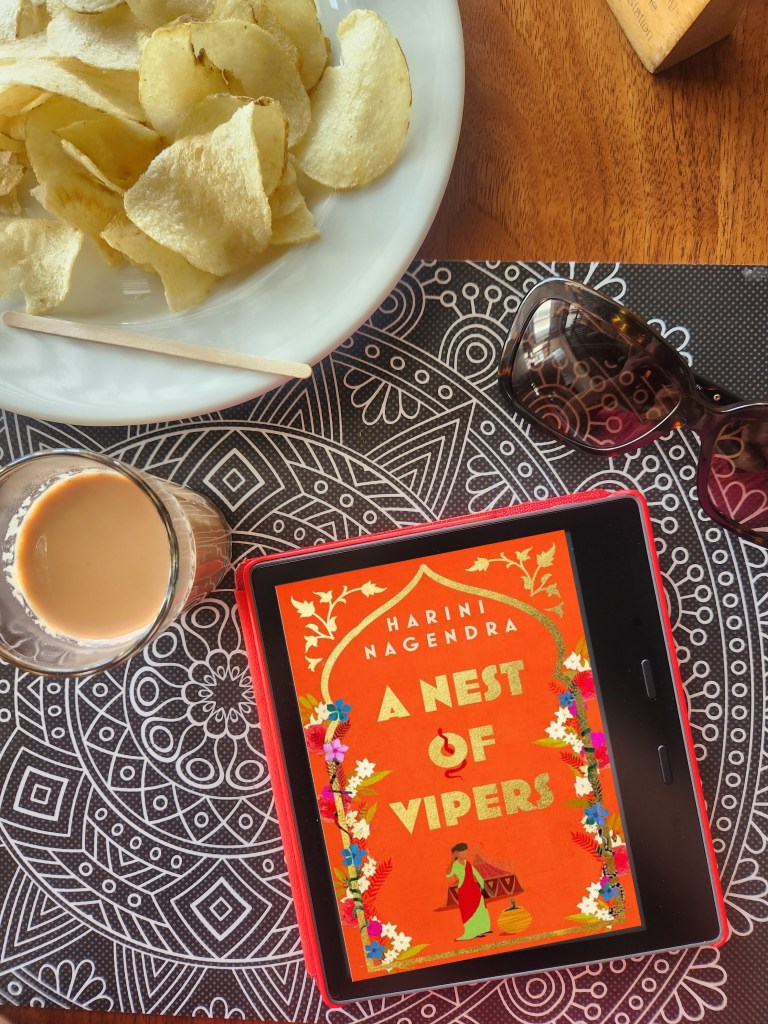
The other two books in the series (so far) are Murder Under a Red Moon and A Nest of Vipers. The former deals with the murder of a rich businessman, and the latter with the murder of a thief. The series also features in my list of Mystery and Thriller Books from South Asia.
Throughout the BDC series, we are immersed into the bustling society of Bangalore and the people who reside there. The theme of the growing Independence movement is also tied into the plot in a nuanced manner. Kaveri’s character is particularly engaging, embodying both the constraints and the quiet rebellion of women in her era. Each book builds on the last, creating an engaging narrative arc that kept me hooked from start to finish.
We look at the English through Kaveri’s eyes and how she felt meeting an Englishwoman who only spoke of frivolous things and looked down upon the local population with derision. Kaveri’s criticisms are not limited to English society. She also sees shortcomings in her own world and looks for ways to change what she can.
Of course, at its core, it is a mystery series. Each book has a new murder mystery that needs solving. The suspense builds up through the book and is sustained till the end. I did not feel that the reveals were very obvious nor were they disappointing in any of the books.
I loved that at the end of the books, there were recipes—both edible and cosmetic—that we could try making at home.
There was a similar series before this that gained much popularity internationally, but it wasn’t half as good. It was written for a primarily White audience and it showed. The BDC differs in its context and content by making it relevant for today’s audience and not pandering by way of fetishes and unnecessary explanations.

Themes in The Bangalore Detectives Club
The books deal with a variety of social themes without being preachy; sometimes, these themes are a background narrative, and other times a central concern. The strong feminist protagonist, its setting of the Independence movement, and its incisive commentary on caste and class divide make this more than just a cosy mystery series. Through Kaveri’s eyes, we are invited to reflect on broader social issues that resonate well beyond the novels.
Feminism and Women’s Empowerment
At the heart of the series is Kaveri Murthy, a young, intelligent, and determined woman who defies societal expectations. Kaveri’s character challenges the traditional roles assigned to women in her time. Her interest in pursuing her studies and involvement in detective work, both domains typically dominated by men, is a powerful statement on women’s right to pursue passions beyond domestic confines.
Throughout the books, we see how women are restrained by society, often by other women. Her growing gang of women detectives come out of their corners and find meaning and purpose in their lives apart from their limited household duties. The feeling of sisterhood is strong, where each woman helps the other instead of the stereotypical trope of women putting other women down. Kaveri’s relationship with her mother-in-law is also handled well. Her objections to many things Kaveri does are shown as part of her upbringing, but her willingness to understand and change is part of her growth.
Kaveri’s journey through the series showcases her own growing independence and self-assurance while also uplifting other women along the way.
Women’s dreams were only as big as their husbands’ egos would permit them to be.
Historical Context and the Independence Struggle
We are given a vivid picture of 1920s Bangalore, a city that’s part of the independence movement but is not so actively involved that it dominates the plot. From the gang of street boys who deliver secret messages to the non-violent rebellions, the books use this era as a background, giving readers insights into the political situation of the time. The main characters support the freedom struggle but cannot do so openly due to fear of repercussions. They do point out some of their peers who prefer the advantages they gain by favouring British rule.
Kaveri notes the attitudes of the British towards Indians. For example, Dr Roberts is portrayed as one of the good ones, but then she sees how poorly he speaks with his Indian staff. She makes it clear that there was no good reason to be siding with the Empire.
Some of the dates or sequence of events that are based on actual events are not accurate, as pointed out by the author, for the sake of the storyline but it doesn’t detract from the narrative.
The British and American women’s weeklies that she read seemed to think women were empty-headed creatures, only covering topics such as how to decorate your home, cook meals for your family, and dress to keep your man’s interest.
The Rich and Poor Divide
The books also explore the stark contrast between the lives of the rich and the poor in colonial Bangalore. Through Kaveri’s investigations, readers are exposed to the opulent lifestyles of the British and the Indian elite, juxtaposed against the struggles of the city’s poor.
This rich-poor divide is not just a backdrop but a critical element influencing the plot and character motivations. Kaveri is conscious of how privileged she is as compared to many of the men and women she meets along the way, and tries to help them in whatever way she can.
She tried hard, but feared she found she could not understand how different the lives of these women were from her own relatively well-ordered ways of living, with societal structures that kept women like her safe.
Breaking Barriers of Caste
Kaveri’s interactions often cut across caste lines as well, challenging the entrenched social norms. She ignores her mother-in-law’s horror at visiting the homes of people who would be considered ‘lesser than’ them. Her friendships and collaborations with people from different castes and jobs (such as Mala, who is a prostitute) reflect a progressive outlook, advocating for a society where one’s worth is not determined by birth but by actions and character.
Verdict: Must Read
Interview with the Author
I found out that Harini Nagendra is very approachable when our book club decided to read her book, and she sent us an encouraging message. After reading the series so far, I had some more questions for her, which she was kind enough to answer.
What attracted you to the 1920s in particular as a setting?
The 1920s is the classic Golden Age in which so many mysteries that I admire are set – by authors like Agatha Christie and Dorothy Sayers. It’s the time in between the World Wars, when women are stepping out of the house in larger numbers than ever before, seeking education and jobs, and fighting for suffrage – the right to vote. It’s also an interesting time for science and technology, when the telephone has arrived, the science of fingerprinting has been developed, and many other factors that are interesting to weave into mysteries. So it was a natural choice for me to showcase this period.
Did you have the social themes in mind before writing the story, or did they come up as you went along?
There were some themes that I knew I wanted to address from the beginning – especially the issues of women’s rights to education, poverty, and caste discrimination. But other themes – like the growing relevance of the Indian independence movement – have evolved as I started to write the series, and conducted more research that was fascinating, and which I wanted to showcase.
How did the drastic shift from non-fiction to fiction come about?
It’s not that drastic a shift for me! Since I was a child, I wrote fiction, and have had a few short stories published in newspapers and magazines as well. For the past couple of decades, my academic and non-fiction writing took precedence, but I always knew I would return to writing fiction – it was just a question of time.
Was the series initially planned as a Kaveri and Ramu series but changed to Kaveri and her girl gang?
It is still a Kaveri and Ramu series – Ramu plays a very important role in Kaveri’s life – but I also always envisaged it as a Detectives Club, with themes of sisterhood and solidarity. In real life, it is rare that one hero, or heroine, achieves something completely on their own – there is always a collective that works together, often behind the scenes. I wanted to bring that collective collaboration into focus, and Kaveri’s women friends are such fun to write – they support each other, and hold each other up in so many different ways. It’s a very positive way of tackling change, especially for young women who may be reading these books.
Note: Some links are part of an affiliate program, which means that if you click on a link and buy something, I might receive a percentage of the sale at no extra cost to you.





 Love, Life, & Beyond
Leave a reply to Reading Challenge 2024: Exploring Global Mystery and Suspense – Love, Life, & Beyond Cancel reply