
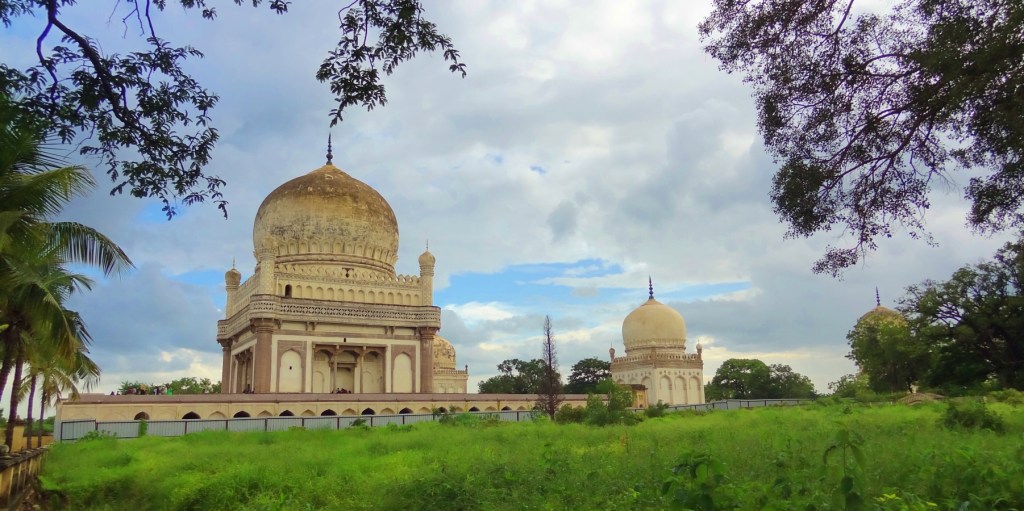
Are the Qutb Shahi Tombs part of your Hyderabad itinerary? Sometimes you take things closest to you for granted. It’s true not only for relationships but also for travel. We were always so busy planning for our next out-of-city travels that we utterly ignored the varied and rich heritage of the city we lived in. Hyderabad is steeped in history and has some remarkable monuments, some in ruins and some preserved.
These massive monuments to the memory of departed kings of Golconda are most interesting. The grandeur of their appearance, their silent by solemn reminder of the history of the days when they were built and the great warriors whose bones they cover, their close proximity to the grand old fort of the kings…must appeal to even the most unimpressionable of visitors. — A. Claude Campbell, Glimpses of the Nizam’s Dominion (1898)
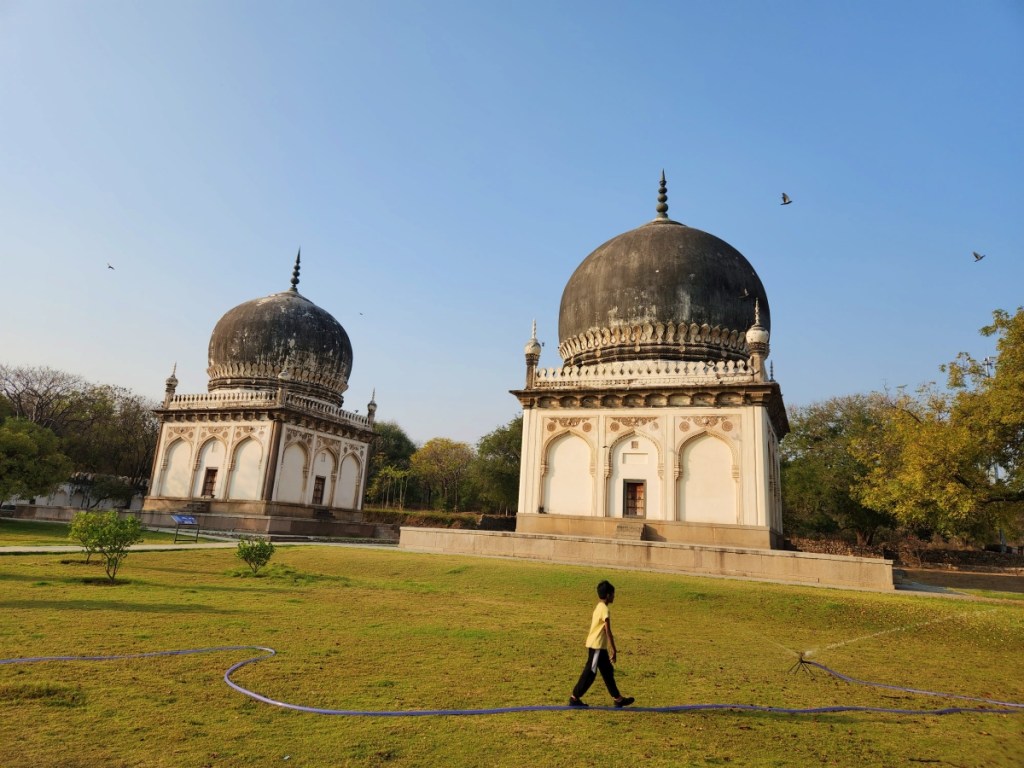
We had already visited some of the city’s more famous landmarks—the Golconda Fort, Salar Jung Museum, Chowmahalla Palace, Charminar, etc. but hadn’t yet been to the Qutub Shahi Tombs that were quite close to where we live.
We went there on a whim, without any research. I admit I had expected to find some dilapidated old ruins, but was pleasantly surprised at the well-maintained oasis I found instead.
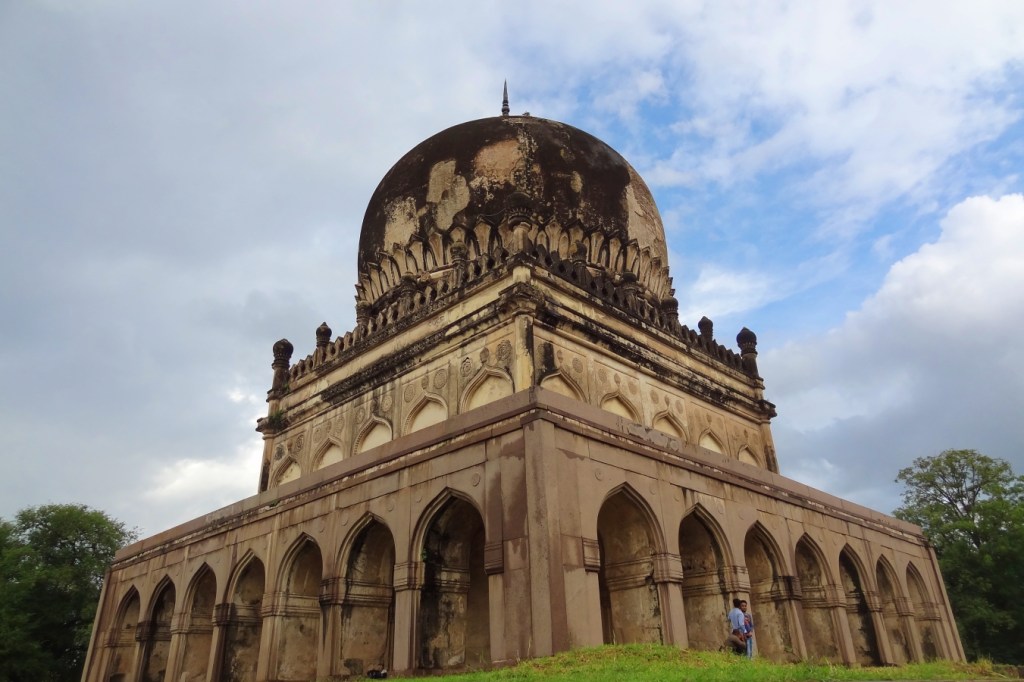
We hired a tour guide who offered us his services at the entrance. He gave us a detailed history of the cluster of seven tombs. To show us the acoustics in one of the domes, he gave us a moving prayer rendition that echoed through the chambers. It was beautiful to hear.
Brief History of the Qutb Shahi Tombs
The Qutb Shahi Heritage Park has the tombs and mosques built by the various kings of the Qutub Shahi dynasty. In the centre of each tomb is a sarcophagus that is placed over the actual burial vault in a crypt below.
These tombs were considered sacred during the Qutb Shahi period. In 1687, during the Siege of Golconda, the tombs were used as barracks by the invading Mughal army and guns were mounted onto the mausoleums to bomb the fortress.
The tombs fell into disrepair until Sir Salar Jung III ordered their restoration in the early 19th century. All except the last of the Qutb Shahi sultans lie buried here.
The tombs were once furnished with carpets, chandeliers and velvet canopies on silver poles. Copies of the Quran were kept on pedestals and readers recited verses from the holy book at regular intervals. Golden spires were fitted over the tombs of the sultans to distinguish their tombs from those of other members of the royal family.
-Wikipedia
Although none of the old world extravagance and glamour remains, the structures themselves are an impressive reminder of their glorious past.

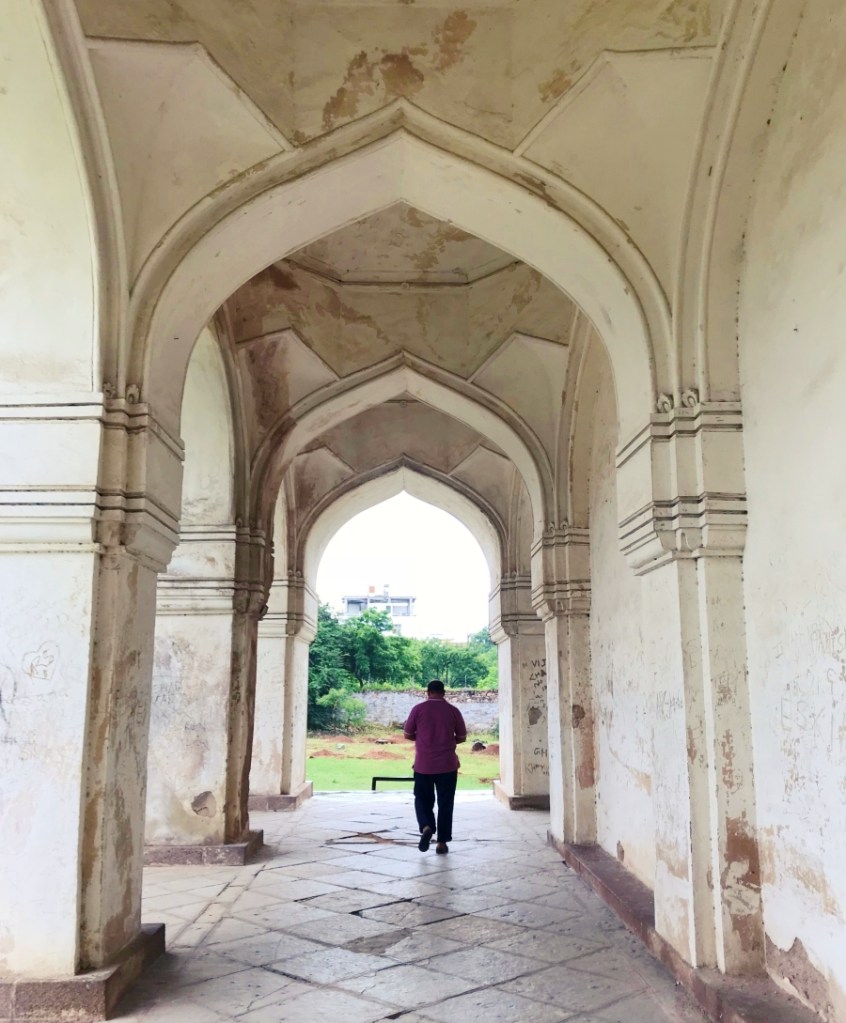

It was an excellent way to spend an afternoon – looking at some beautiful architecture and learning about local history. It is near Golconda Fort and Taramati Baradari so you can easily cover all these monuments on your trip.
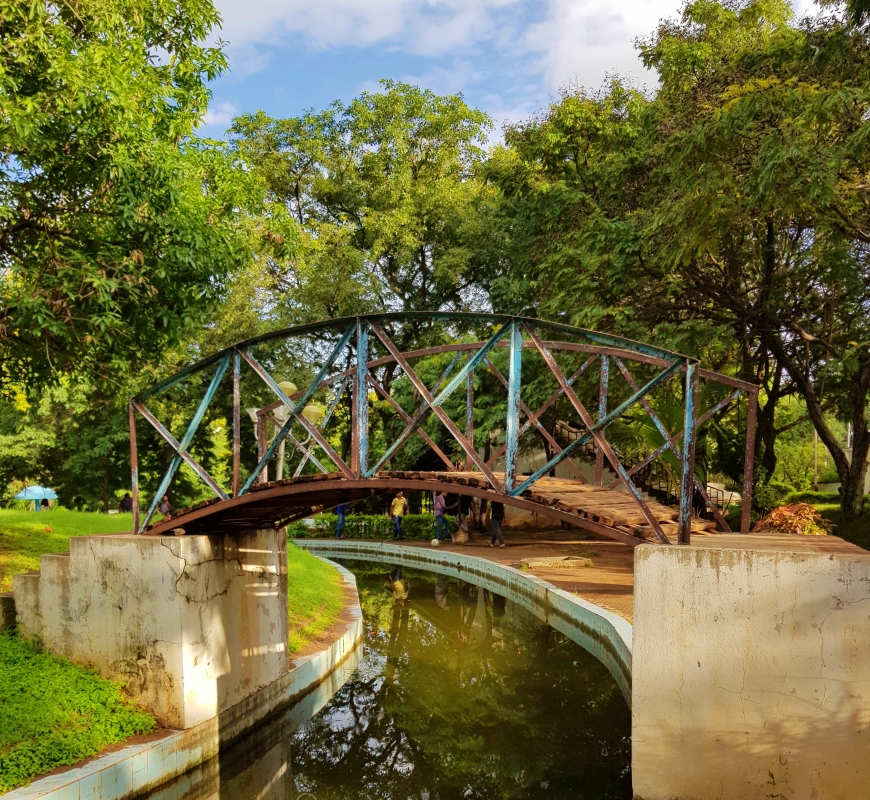
Nearby is the Deccan Park. It is a small green space that will soon make way for some parking space. It used to have a mini-train that ran around the park; now just a tin box kids can play in. So visit before it disappears completely.
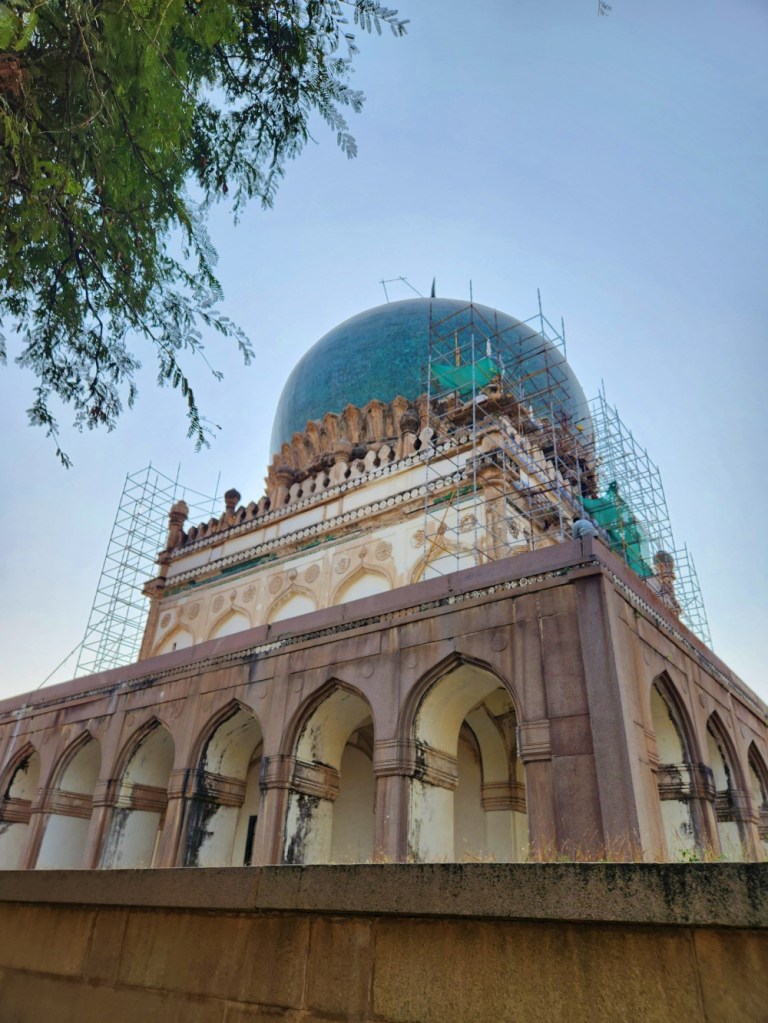
UPDATE 2025: The tombs are undergoing some restoration work to bring out its past glory. It was good to see some of the work that has started, like the re-tiling of the domes. Their Instagram page and website have more details on that.



 Love, Life, & Beyond
Leave a reply to Harshal Cancel reply