
Becoming a parent is a wonderful and life changing experience. You have a new little person in your life, so there’s going to be changes in you as well.
As a reader and seeker of information, I turned to books and the Internet to help me out during different stages of my parenting journey.
I am so grateful to be living in an age when so much information is available literally at my fingertips. These are some of the books that have broadened my parenting perspectives and helped me better connect with my child.
What to expect: The First year by Heidi Murkoff
This is of course the bible for every new parent. It gives suggestions from different parenting perspectives so you don’t feel your choices are wrong or something you need to feel guilty about.
It takes you through the different milestones each month. Your baby might reach them sooner or later but at least you’ll know what to expect and how to deal with it. It’s very detailed and that gives you a sense of confidence so you don’t have to call someone in the middle of the night for assurances that your baby is alright.
I would suggest reading this instead of the pregnancy book in the same series.
Scientific Secrets of Raising Kids who Thrive by Peter M. Vishton
This is a series of lectures available as an audiobook. I found a lot of the ideas and research very helpful in understanding how I want to parent my child. Again, this is not a how-to book, but a research-based look to understanding what works better and why.
I got to know the difference between focussing on a child’s intelligence vs their efforts, or the perils of too much applause, and why you shouldn’t introduce a new food to your baby when they’re unwell. It covers many such minor behaviours we don’t think twice about.
It’s a good one to start with when you want to break the cycle of “we went through this and turned out fine”.
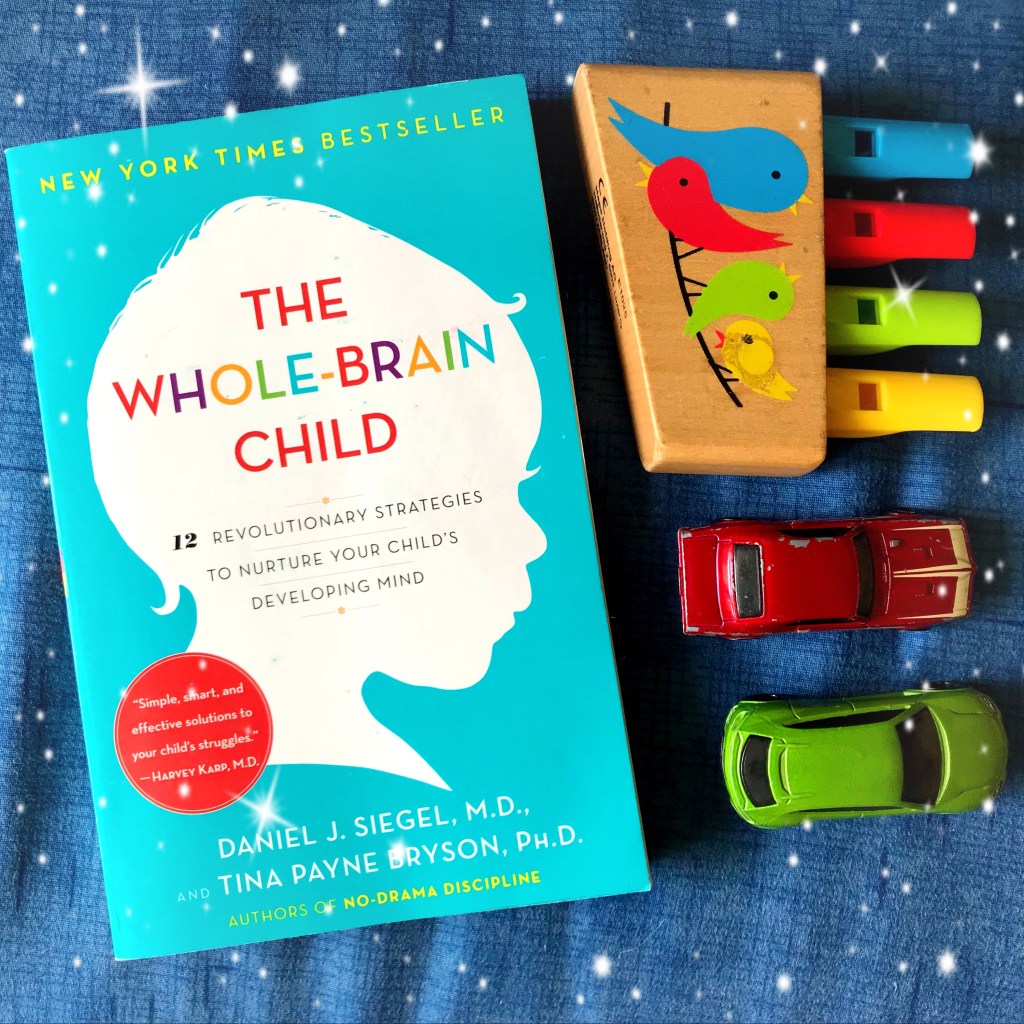
The Whole-Brain Child by Daniel J. Siegel & Tina Payne Bryson
This book is for parents of toddlers. It’s a good introduction on how to deal with kids especially during difficult days when they don’t want to listen to any reasoning.
Dealing with temper tantrums and power struggles might not become easier, but you’ll understand better why it might be happening. It definitely helps you manage the situation and your response in a healthier way.
The workings of the child’s brain is well explained and the age-wise chart of responses at the end is also helpful.
Here are my top notes from this book:
- Connect then redirect: Deal with the emotions first by listening and non verbal cues like hugging and being attentive. Then redirect to logical side about what should we do
- Name it to tame it: Have them tell the story in their version over and over again till they overcome the fear associated with it
- If the child is throwing Tantrums when they are being logical, set boundaries and discuss behaviour: I know you’re upset but if you’re screaming and hitting you’re not going to get what you want… Then follow through. No empty threats.
- If it’s an emotional tantrum then first calm them down. Connect and redirect. Later talk about appropriate behaviour for next time it happens again.
- If the child’s upset try to redirect to rational and logical thinking… How can we negotiate and solve this
- Keep engaging logical and rational part of the brain through the day
- Control emotions and body… Deep breaths before acting out
- Self understanding through questions about what emotions might come up during certain times and then ask leading questions on solutions to them
- Empathy…Teaching them to be aware of other people’s emotions during the day
- When they’re overwhelmed just a burst of physical activity might help calm them
- Talk over painful past experiences that they might not they, to bring them to the front so they can deal with it
- Avoid tantrums with humour and play
- Try to see from other’s perspective. Ask questions as to why someone might be feeling a certain way.
For EXTRA credits:
For parents of newborns, I would highly recommend researching baby sign language. It helped us understand our baby’s needs a little better and prevented a crying fit or two. You can make up the signs that make sense to you. The goal is to communicate better with a non-verbal baby.
All the best.
You’ll need it!
Note: The links are part of an affiliate program, which means that if you click on a link and buy something, I might receive a percentage of the sale, at no extra cost to you



 Love, Life, & Beyond
Leave a comment