
Recently I came across the Anthropic study titled Labor market impacts of AI: A new measure and early evidence. It shows various job sectors are barely utilising the full potential of AI tools in the workplace. It also predicts that when they do start using it more, many of the jobs as we know them now, will become obsolete.
What the Anthropic report found is that currently, AI can cover most computational tasks like finance, computer science, office administration and the like. As the technology improves and companies start shifting to a more efficient (and less expensive) digital workforce, white-collar jobs will start to become outdated. And what is not covered within the AI scope, will be outsourced to robots. So, why does that not bother me?
Those who will enter the job market in the next five or ten years will have a whole new way of doing things and newer career avenues without the grunt work. The skills that will be of most value will be those that we call ‘soft skills’—to be able to adapt, be resilient, problem-solve, and have high levels of emotional intelligence and critical thinking.
In areas such as computer and math, only 33% of the work is being done by AI. If fully applied, AI is capable of doing 94% of the work in that area. There are some sectors that will remain immune from unemployment due to AI. Jobs that involve physical care, judgement roles, and other roles that need physical presence like mechanics and plumbers.
So does that mean future job markets will only have openings for handymen and janitors? No, because a lot of those jobs will also be done by robots.
I am looking forward to a job market where people are not doing the grunt work of making endless reports, balancing ledgers, cleaning messes, and spending hours coding. Where can humans contribute?
AI can grade homework but not manage a classroom; teachers who are more involved in holistic development of children will be more in demand than those who merely explain the subject and grade papers. People who can visualise how to use calculations will be more valued than those who can just calculate. A robot can clean up the mess a patient made, a nurse will be needed to console and reassure them.
Young adults entering the job market in the next 5 to 10 years will need to monitor, understand, and visualise possibilities. The next generation of job seekers and job creators need to move beyond clerical and computational tasks.
Mainstream education is still lagging far behind in equipping kids for these roles. They still focus on theory rather than practical application. Children are trained to follow rules and secure good grades. I had written about how young kids’ lives are being effected by stress.
What we need is fool-proof education to make them resilient and adaptable to change.
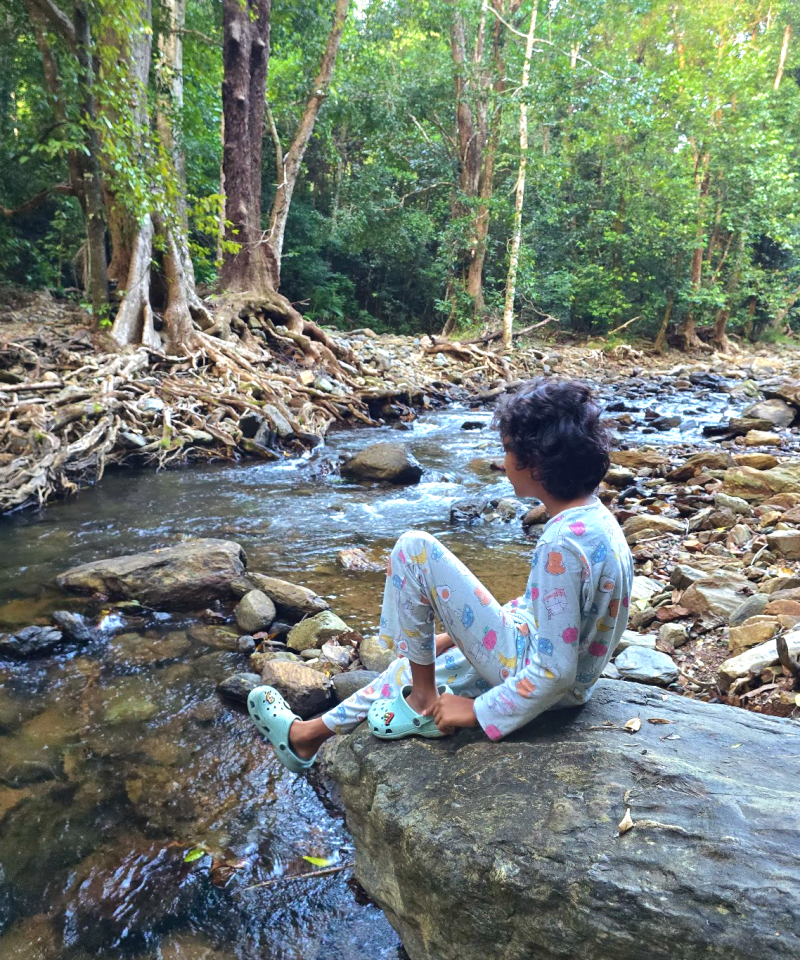
Even before technology came into the picture, I knew I didn’t want my son to be in the claustrophobic school system. He started his schooling journey in a gentle environment and will continue doing so. I can see the confidence he has gained to question everything, the empathy he has for fellow human beings, and the capability to live a stress-free childhood. Of course, he is learning Maths (and other subjects) along the way.
We need to realise that AI cannot automate curiosity, craftsmanship, or human connection—skills that are seen as ‘useless’ in the current education system. How are you ensuring your kids are ready for whatever the future brings?



 Love, Life, & Beyond
Leave a comment