
2026 is the year of change for me. I can feel it. So, let’s try something different this year. Instead of my usual year-end, genre-wise roundup, I’m switching to monthly reading posts. Writing about my reads in smaller windows makes it easier for me to notice patterns: How books speak to each other, what themes I’m gravitating towards, and how my mood shapes my choices. It also lets me give more details on each book review, and add more context, rather than compressing everything into one long list at the end of the year.
My January’s reads share an interesting coincidence: every book I picked up this month was written by a woman. It wasn’t intentional or planned; I was simply drawn to them more than others in my TBR pile. Fiction, Non-fiction, and Essays are in the mix. Each book was a delight to read, and I am very pleased with this strong start to my reading year.
Heart Lamp by Banu Mushtaq (Translated by Deepa Bhasti)
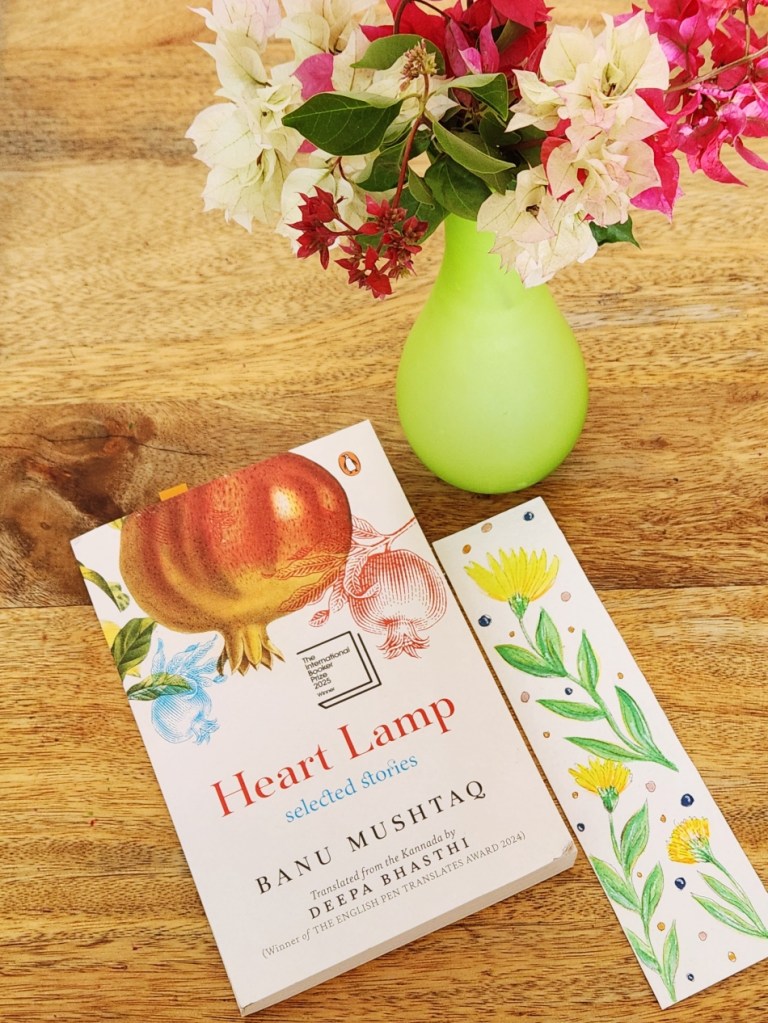
The book has 12 short stories from the lives of women in the Muslim community in Karnataka. The author calls out misogyny, religious hypocrisy, and social oppression through sharp observations, humour, and wit.
Although the stories are of a particular community, the themes have wider relevance. Women being used as housekeepers and child bearers, men not liable for their actions, and religious pedants who care more about keeping their power rather than helping people in need are all stories that resonate.
Stories like The High-heeled Shoe and A Taste of Heaven are lighthearted with an underlying relationship divide; whereas Fire Rain, Heart Lamp, and The Arabic Teacher remind us how patriarchy uses and discards women. In the final story, Be a Woman Once, Oh Lord!, the author appeals to God, urging Him to experience the world through a woman’s eyes and to soften the cruelty of that existence.
“You gave me the strength to bear a lot of pain. But you should not have given him the cruelty to cause so much of it.”
- Verdict: Must Read, although you need to be aware of the social context to appreciate it.
- Genre: Fiction, Short Stories
- Format: Hard Copy
- Pages: 214
- Country: India
- About: Banu Mushtaq is a prominent voice in Kannada literature known for her engagement with social justice and women’s lives. Originally written in Kannada, the collection reaches a wider audience through its English translation. The book won the International Booker Prize in 2025, highlighting the growing global attention to translated Indian literature.
Too Much Happiness by Alice Munro
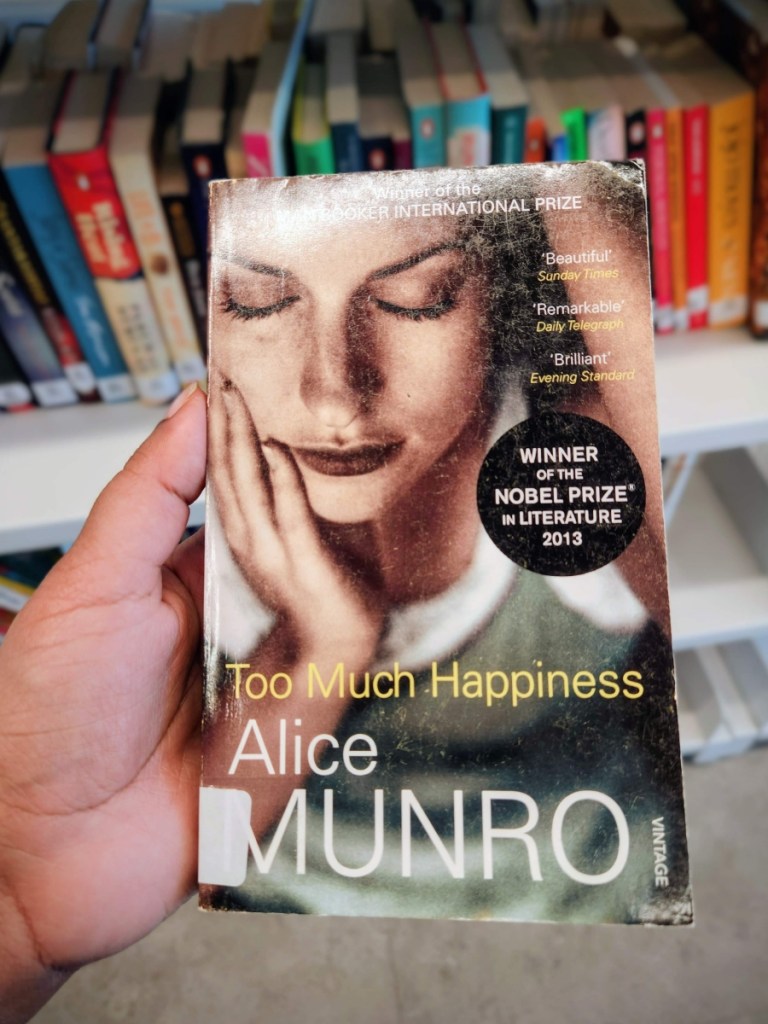
I chanced upon her name in a book I read last year (The Storied Life of AJ Fikry). I picked up this collection of short stories by her and was not disappointed. The first story itself is a punch to the gut with a heart-wrenching detail mentioned mid-way. Most of her stories start off innocuous enough, and as the layers are revealed, you find yourself riveted.
Not every story is hard-hitting. Some are gentle ponderings and reminiscences, while some leave you questioning what happens next. Like in the story, Free-Radicals where you wonder if the end crash was a coincidence or was there something sinister happening. And the chance meeting in Face makes you think how would you prefer to bump into someone you knew and loved a long time ago.
The title story is based on true events about a Russian mathematician and writer Sophia Kovalevskaya. It is how she imagines her last few weeks to have been, giving us glimpses of her past as well. It is an interesting collection of stories about flawed humanity and how people move on with their lives.
“She was learning, quite late, what many people around her appeared to have known since childhood – that life can be perfectly satisfying without major achievements.”
- Verdict: Read one or two at a time, or between books. It is a mixed bag of engaging stories.
- Genre: Fiction, Short Stories
- Format: Kindle Ebook
- Pages: 322
- Country: Canada
- About: Alice Munro is celebrated for shaping the modern short story form. Her stories explore relationships and lives often set in small-town and domestic spaces. Munro’s work has earned some of literature’s highest honours, including the Nobel Prize in Literature and the Man Booker International Prize.
Careless People: A Cautionary Tale of Power, Greed, and Lost Idealism by Sarah Wynn-Williams

The title is taken from this quote from The Great Gatsby, and it encapsulates the whole book perfectly: They were careless people, Tom and Daisy – they smashed up things and creatures and then retreated back into their money or their vast carelessness or whatever it was that kept them together, and let other people clean up the mess they had made.
Anyone who has paid any attention to reports on social media will already know most of what Sarah mentions. Targeting vulnerable groups and bending the rules for profits seems so commonplace now. Protecting the rich and powerful sexual harassers while victims are sidelined, also happens more regularly than one can imagine (the Sheryl Sandberg information surprised me though). I was disturbed by Sarah’s description of the incident where a woman was having a seizure on the office floor and not one person helped, even when actively asked for information.
My takeaways from this is that blaming one company can only be a start, because we also need to call out the law makers and country leaders who shmooze with tech billionaires for personal propaganda and public image. We also need to learn from history and prevent this happening on a much larger scale with the advent of AI. But will we? I doubt it!
“When you have so many other people doing things for you professionally and personally, you stop taking responsibility for any of it.”
- Verdict: Must Read. It will enrage you and also make you feel helpless and guilty every time you use social media.
- Genre: Non-Fiction, Memoirs
- Format: Audible Audiobook
- Listening Time: 13h 16min
- Narrated by: Sarah Wynn-Williams
- Performance Rating: 5/5
- Country: New Zealand/USA
- About: Sarah Wynn-Williams is a public policy expert and her memoir about her time at Facebook is quite shocking for those who have lived under a rock the last decade. But even if you haven’t, it is maddening to hear about the details of corporate greed and evil. She’s being sued (obviously) by Meta, which is why you won’t see the book being promoted as heavily as others.
A Spy in the House of Love by Anaïs Nin
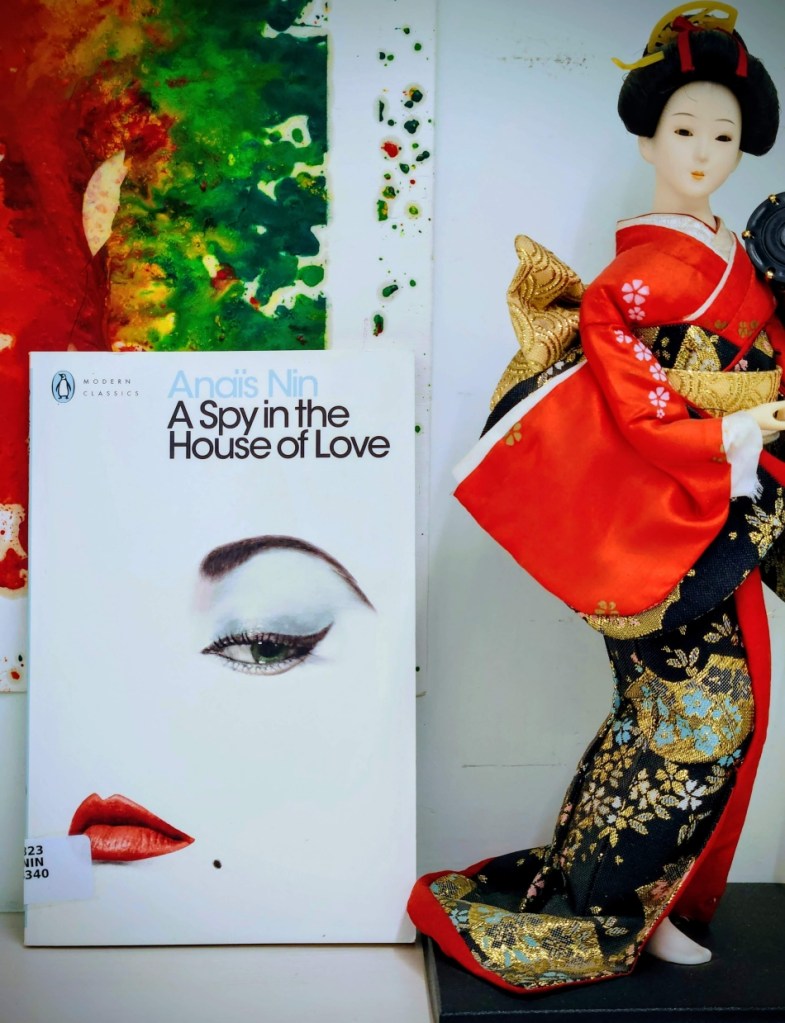
The story, set in the 1950s, follows a woman’s inner thoughts and escapades. Sabina wants sexual freedom, the kind that men enjoy: having affairs on a ‘business trip’, not wanting to commit, and finding happiness through pleasure from various sources. We follow her as she flits from one lover to the next, and I have to admit I thought it was leading nowhere, till the last few pages.
The sensual and emotional descriptions are masterfully written. I especially loved the narration of how she uses make up as a shield, or the comparison of her outer confidence vs her inner fear. She realises that she cannot fully find freedom or pleasure like a man because of her guilt and fear. She seems like the life of every party, but her insecurities reveal themselves to a trained eye.
Each affair highlights a different part of her personality, but no one truly fulfills her. She compares herself to the painting of a Nude Descending a Staircase by Duchamp where different aspects of a woman seem to merge into one. She also laments that her husband only remembers her as the teenager he married and protects her as such. He doesn’t realise she’s changed and her wants and needs have grown accordingly, resulting in further discontent.
The book can’t be clubbed into romance or erotica per se, but it’s rather an exploration of a woman trying to heal her inner turmoil through sexual partners.
“Anxiety had entered her body and refused to run through it. The silvery holes of her sieve against sorrow granted her at birth, had clogged. Now the pain had lodged itself inside of her, inescapable.”
- Verdict: Read, but with an open frame of mind.
- Genre: Fiction, Romance
- Format: Hard Copy
- Pages: 122
- Country: France
- About: Anaïs Nin was a writer and diarist born in Paris to a Catalan father and a Danish mother. She is the author of avant-garde novels in the French surrealistic style and collections of erotica. Many believe the sexual adventures she writes about are, at least partly, based on her own experiences.
The Unselected Journals of Emma M. Lion #1 by Beth Brower
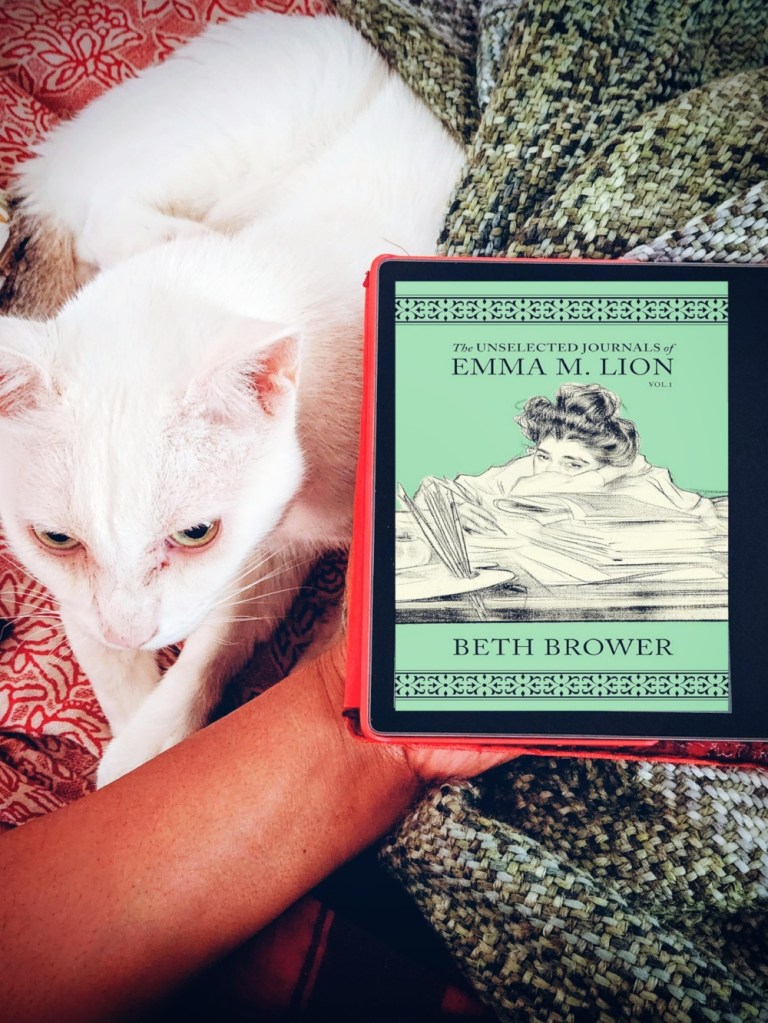
This series was so highly rated, and was available for free with Kindle Unlimited so I was quick to try it out. I knew it would be a light read going in, but soon realised that even a feather would be heavier than this! Emma has moved back to London and is trying to get her cousin to pay her for some work she did. That’s basically it.
Some comments mention that it takes up to book 4 or 5 to really get hooked to the story, as the storyline is equivalent to a TV series season. I refuse to spend more time on it. If books 1 through 5 are a continuation of the season, then why not make it a single book?
There is a semblance of a storyline. Emma is going to come into her inheritance soon (most of it squandered by her cousin), and there’s an interesting tenant that’s just moved in, but the writing didn’t hold my interest. The author tries (very hard) to make her heroine witty and humorous, but there’s just not enough meat in the first book for me to continue.
“It takes a courageous man to marry a woman with a mind.”
- Verdict: Nope!
- Genre: Fiction
- Format: Kindle Unlimited ebook
- Pages: 127
- Country: USA / set in Victorian England
- About: Beth Brower is the author of books such as The Books of Immirillia series, The Q, and The Beast of Ten. The Journals of Emma series is planned as a TV series, with a bunch of books comprising one season, books 1 to 5 being season 1. There are at least 3 seasons planned so far.
Into The Leopard’s Den by Harini Nagendra

This is Book 4 of the Bangalore Detectives Club series.
I love this series. The stories are cosy mysteries with so many other themes intertwined into them. The heroine of the series is young Kaveri in 1920s India. She is not one to sit at home and be a subservient wife to Ramu. She has an interest in studying maths and solving puzzles.
She has now made a name for herself as a detective with a knack for solving crimes in Bangalore where she lives, but this adventure takes her to the nearby town of Coorg. An old woman is dead and her last request was for Kaveri to find her killers. But as the bodies pile up without any credible suspects, and a ghost leopard on the loose scaring away workers, she is relying on the killer to make one wrong move.
I love that the series didn’t end once she got pregnant, and will continue after the birth of her child as well. I look forward to how the adventurous Kaveri will continue her escapades keeping in mind she can no longer be reckless.
Read my review of the series so far: Book 1 and The Bangalore Detectives Club Series.
“Thinking like you, who lives in a big house, with cupboards full of money – not like one of us. Do you really think Hiramma can afford to stop working, even for a day?” Venu scowled.
- Verdict: Must Read. You could read this book on its own, but reading the series will give you more context.
- Genre: Fiction, Cosy Mystery, Historical Fiction
- Format: Paperback
- Pages: 310
- Country: (Pre-Independence) India
- About: Harini Nagendra is a professor of ecology at Azim Premji University. She writes on issues of nature and sustainability and has published works of non-fiction on the topic of sustainability in urban areas. The Bangalore Detectives Club is her first work of fiction. She is also very approachable to discuss her work. She was gracious enough to write a note for our book club and also answer a few questions (transcript in my previous article).
Freelove by Sia Figiel
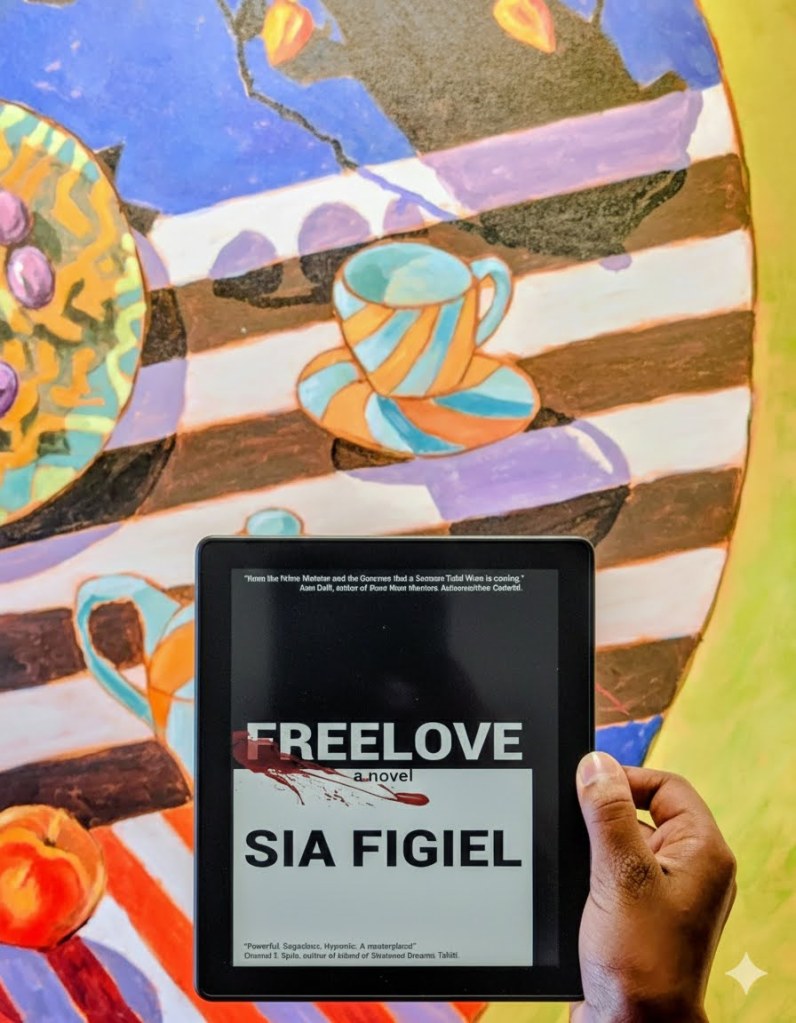
Inosia is a carefree 17½ year old girl in a small city in Samoa. She loves Star Trek, science, and Madonna. When her mother sends her to the market to buy some threads, she is offered a ride by her science teacher and spiritual brother Ioane. She hesitates but accepts. Of course, every woman knows what’s happening next, and it happens. Even though the author states that the sex is consensual, the power dynamics at play here make that invalid.
However, the book is more about Samoan culture than the relationship: The cultural systems that weave the communities together, the issues they face in the modern world, and how sex is viewed pre and post colonialism.
Inosia, the virgin, discovers her sexuality and understands it within a system that views it as forbidden. There are many interesting aspects describing the community’s cultural and religious practices, and history comparing them to how they all changed post colonialism. The sex scenes are explicit as a young girl is discovering her sexuality, and her lover is gentle and focussed on easing her into adulthood.
There are plenty of cringe dialogues and some repetition. The second part, told in the form of letters, seems like an addition to just explain what happened next.
“The small things that matter so much in relation to the big things. Small things make big things whole and complete.”
- Verdict: Read for the culture immersion, but be aware that the relationship is between a teacher and a student.
- Genre: Fiction, Romance
- Format: Kindle e-book.
- Pages: 240
- Country: Samoa (Oceania)
- About: Sia Figiel is an author of novels, plays, and poetry. She is also a painter. Her first novel, Where We Once Belonged, won the Commonwealth Writer’s Prize Best First Book for the Southeast Asia/South Pacific region. She is currently on trial for the murder of Caroline Sinavaiana-Gabbard.
Middlemarch by George Eliot
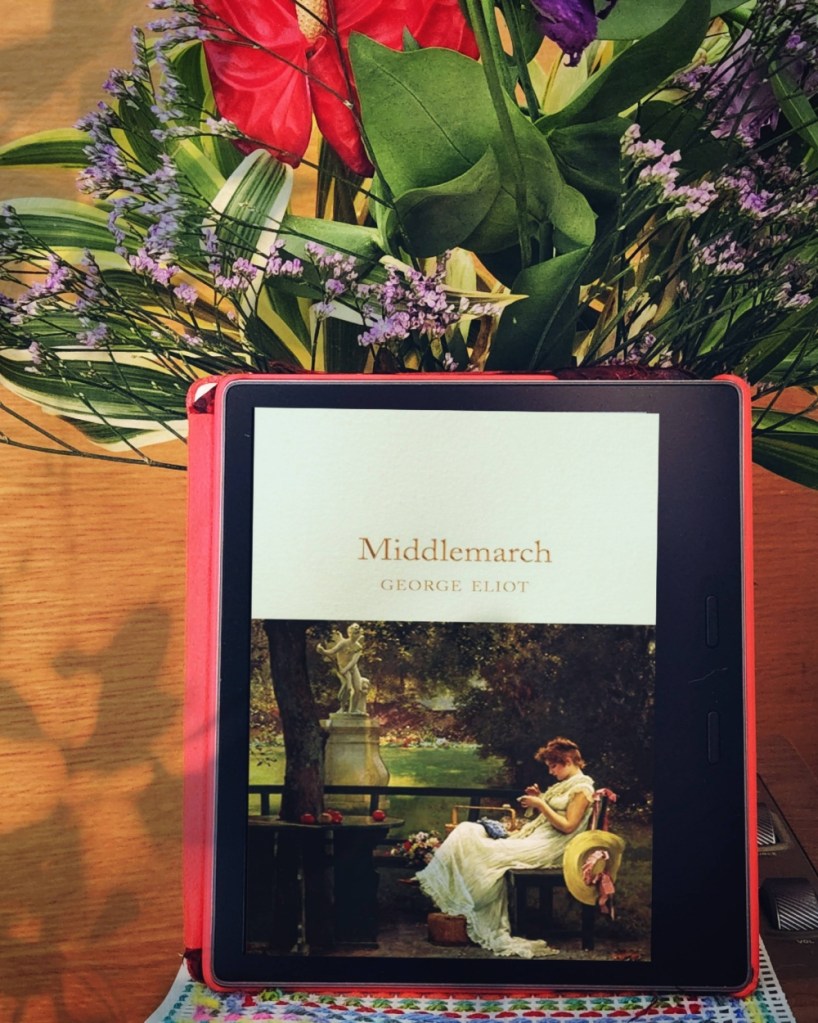
This book has been a revelation, to say the least. There’s romance, politics, religion, feminism, social commentary, and an abundance of well-drawn out characters. From the idealistic Dorothea who marries an insecure Casaubon, to hard-working Lydgate who gets sidetracked, the book is filled with character assessments and how they change over time.
There are many relationships and subplots, each interesting in their own ways, and even the author’s commentary and observations are something I would want to revisit again. She also takes on social issues like the plight of land tenants and the railways being built in the countryside.
The understated cutting remarks and humour are a thing of beauty. You might miss some of them if you’re not careful: Gems like “And, of course men know best about everything, except what women know better.”
Even though the formidable size of this book says otherwise, this was not meant to be read just once. I am already looking forward to re-reading it in print format.
“A man is seldom ashamed of feeling that he cannot love a woman so well when he sees a certain greatness in her: nature having intended greatness for men. But nature has sometimes made sad oversights in carrying out her intention.”
- Verdict: Must Read, twice at least
- Genre: Fiction, Classic Literature
- Format: Audible Audiobook
- Listening Time: 32h 23m
- Narrated by: Maureen O’Brien
- Performance Rating: 5/5
- Country: UK
- About: George Eliot was the pen name for Mary Ann Evans. Her books focus on rural life and the issues they faced. Middlemarch, published in 1871, is set in a fictional town around 1829. According to Virginia Woolf, it is “one of the few English novels written for grown-up people”.
Note: Some links are part of an affiliate program, which means that if you click on a link and buy something, I might receive a percentage of the sale, at no extra cost to you.



 Love, Life, & Beyond
Leave a comment