
There is nothing in this world so pathetic, so moronic, so meaningless as dieting.
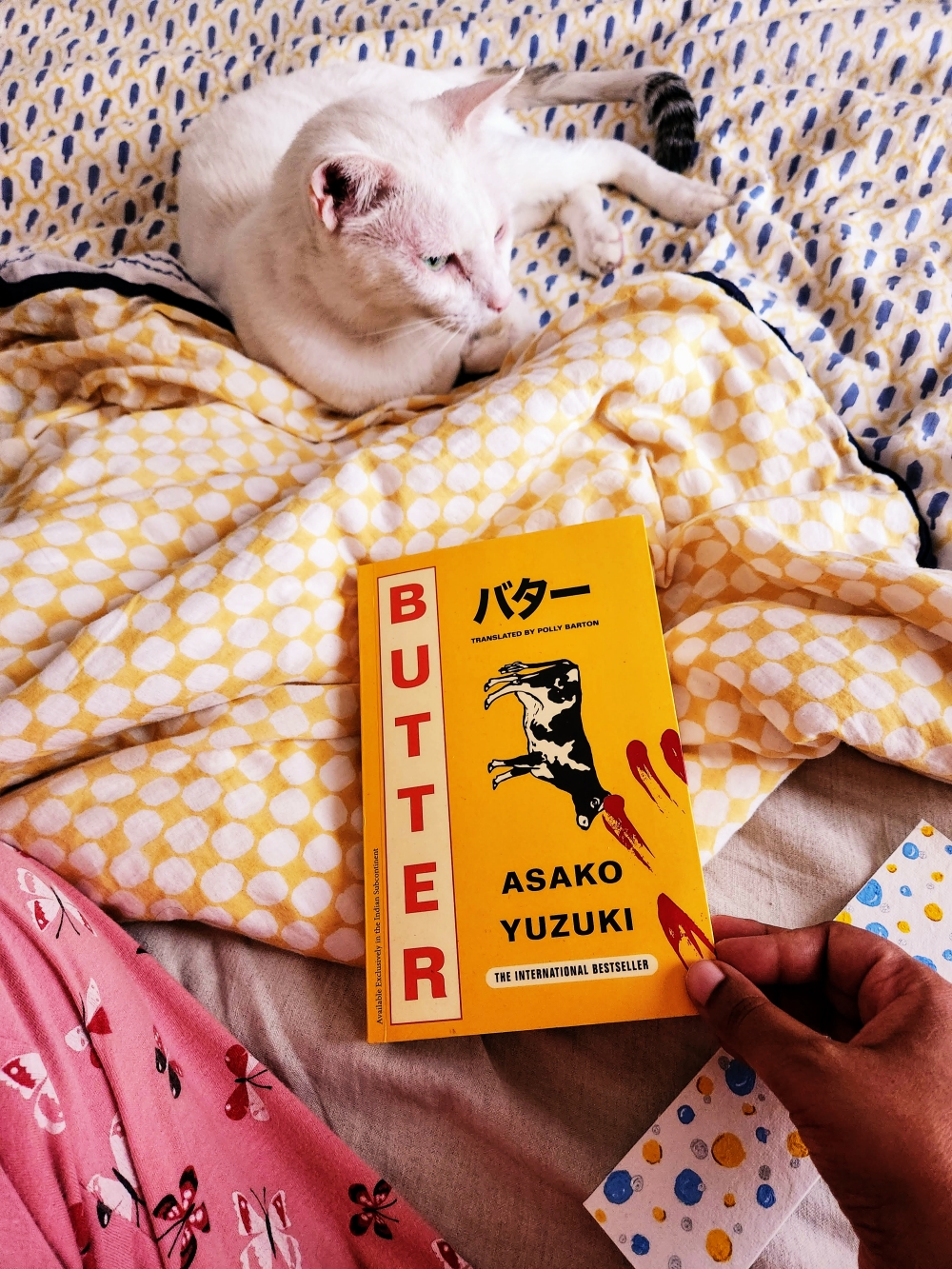
I have to admit, I started this book thinking it to be a murder mystery, but it is not so. Butter by Asako Yuzuki is a pleasantly surprising thought-provoking novel. The story is centered on Rika, a journalist, and her correspondence with Manako Kajii, a convicted serial killer known for her culinary skills. The book takes a deep dive into feminist themes, societal expectations, and the transformative power of food.
Themes of female autonomy, desire, and rebellion, is woven throughout the storyline using food as a metaphor for both nourishment and defiance. The writing immerses you in the world of gourmet cooking while challenging conventional narratives about women’s roles, especially in the Asian context.
Butter makes you reflect on the societal pressures imposed on women—particularly concerning beauty, ambition, and consumption. I loved reading it, even though I was not prepared for it. Read it when you’re looking for something deep and slow.
Author Asako Yuzuki
Asako Yuzuki is a celebrated Japanese author known for her thought-provoking novels. Born in 1981 in Tokyo, she has gained acclaim for her unique storytelling, which often blends social commentary with rich, sensory prose.
Yuzuki’s works frequently explore themes of food, identity, and gender, challenging societal norms and offering fresh perspectives on contemporary issues. Her novel Butter (originally published as Shokumin) became a cultural phenomenon in Japan, praised for its feminist undertones and vivid depictions of culinary artistry.
Yuzuki’s writing has earned her numerous literary awards and a dedicated readership, solidifying her place as one of Japan’s most innovative modern authors.
Translator Polly Barton
Polly Barton is a British translator and writer renowned for her work bringing contemporary Japanese literature to English-speaking audiences. She has translated works by prominent authors such as Kikuko Tsumura, Aoko Matsuda, and Asako Yuzuki.
She is the author of Fifty Sounds, a memoir exploring language, identity, and her experiences living in Japan. Barton’s contributions have earned her accolades, including the 2019 Fitzcarraldo Editions Essay Prize.
Book Review Butter by Asako Yuzuki
True taste came with a high price tag.and a high calorie count to match.
Inspired by the real-life case of the convicted con artist and serial killer known as The Konkatsu Killer, Asako Yuzuki’s Butter is about misogyny, obsession, romance, and the seductive pleasures of food in contemporary Japan.
The novel follows Rika Machida, a jaded Tokyo journalist who becomes obsessed with the enigmatic Manako Kajii, a woman convicted of murdering wealthy men she seduced with her extraordinary cooking. As Rika attempts to unravel the truth behind Manako’s crimes, she is drawn into a world of indulgence and self-discovery, where food is not just sustenance but an expression of identity and defiance against societal expectations.
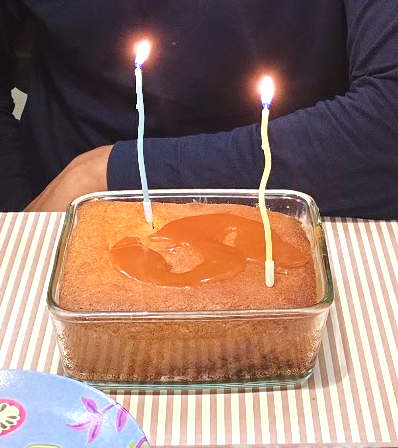
Do not read this book on an empty stomach! There are plenty of food references that’s sure to make your mouth water. When Rika describes eating her first assignment, I could feel the taste of the butter with rice and soy sauce. I even made the pound cake that is mentioned in the book and it was so good! Like Manako says, good ingredients give good results, which is something I’ve learned over the years.
Theme of Feminism in Butter
She was tired of living her life thinking constantly about how she appeared to others, checking her answers against everyone else’s.
In Japan (or anywhere else in the world, for that matter), where societal norms often pressure women to be thin, restrained, and modest, butter—rich and decadent—is a metaphor for excess and defiance. Manako Kajii embraces butter and rich food as an assertion of her power and identity, challenging the idea that women should deny themselves pleasure.
When Rika hears of the case, she reads how surprised people are that Kajii, an overweight woman who was neither young nor beautiful, could be desirable to men. Later we see how Rika and those around her react to Rika gaining some weight. Her boyfriend, Makoto’s blunt remarks left her feeling hurt.
In contrast, Reiko, her girlfriend, offers a more pragmatic perspective, emphasising the importance of finding one’s own personal good amount— whether in body or in life, much like seasoning a dish to taste. This really hit home. We are all trying to fit in a certain mould not realising you just need a different mould.
Yuzuki highlights how external criticism often fuels the pressure to conform, making women feel they need to lose weight not for themselves, but to meet others’ expectations. This theme resonates throughout the novel, celebrating self-acceptance.
In principle, all women should give themselves permission to demand good treatment, but the world made doing so profoundly difficult
Manako Kajii’s unapologetic love for rich, indulgent meals stands in stark contrast to Japan’s stringent beauty ideals, which demand that women remain delicate and restrained. Through Rika’s journey of self-discovery, the novel looks into how deeply entrenched cultural expectations influence women’s relationships with their bodies, desires, and aspirations.
Yuzuki also critiques the gendered double standards surrounding cooking: while men are praised for treating it as a leisurely hobby, women are burdened with the expectation to cook as a duty. (Also reminds me of the movie English Vinglish where Sridevi’s character says the same thing.)
Theme of Destructive Gender Roles in Butter
Why is it that with nobody to watch over them, men can’t stop themselves from falling into disrepair? And that disrepair is then looked upon kindly and excused by the world, seen not as a failure of personal responsibility but something poignant and tragic.
The novel also touches on the social isolation in Japan, particularly in men. This issue reflects deeper societal fractures, such as the traditional beliefs of gender roles and hierarchy.
Kajii’s internalised misogyny highlights how women are often elevated to goddess status for caring for men, as if such labour inherently bestows beauty or worth on a woman. She says: There are two things that I can simply not tolerate: feminists and margarine.
However, towards the end, Manako admits, “When they died off, one by one, I felt a weight lifting from my shoulders. That’s one less person to take care of.” This confession underscores the emotional toll of responsibilities that women carry and the liberation that comes with shedding them.
The book also talks about the power dynamics in relationships, with rich older men grooming young girls, engaging in the “costly pastime of cultivating a young girl so her tastes matched his.”
Men who favour women with bodies like skinny children are the ones with no confidence in themselves.
The novel critiques the façade of the good man archetype. Many men are labeled as such, but their actions often reveal underlying misogyny. Makoto’s attempt to “help” Rika by taking her to a salad place for lunch to aid her in losing weight, exposes his true nature.
Theme of Mental Health in Butter
Don’t you think that’s a disease of the contemporary age? It feels like these days our value is determined by how much effort we make from day to day. That matters even more than our results. After a while, the concept of effort starts to become mixed up with things feeling difficult, and then you reach the point where the person seen as the most admirable is the one suffering the most.
The theme of mental health is woven throughout Butter through Rika’s personal journey. Rika comes to the painful realisation towards the end that she cannot save the people she loves; she can only be present for them and offer support when they seek it. This epiphany is tied to her lingering guilt over her father, whose living conditions she once viewed as tragic and pitiable.
Rika’s father, who lives alone, becomes a subject of gossip among other women, who frame him as an oversized baby neglected by her mother. They even try to guilt her mother into going back to him to take care of him. Over time, Rika recognises that his disheveled state was less about hardship and more about his own laziness and refusal to take responsibility for his surroundings.
By treating himself badly, he had accused the people around him.
Rika realises that even if she were to die alone, she wouldn’t resent anyone for it. Instead, she resolves to live life on her own terms—cooking and eating what she wants and how she wants it.
At her lowest point, Rika reaches out to Makoto, asking him to bring her food. This act is not just about sustenance but a conscious effort to resist drowning in sadness. She is determined to nurture herself, even in moments of despair.
There are plenty of pearls of wisdom thrown in throughout the book. Like the observation that people these days want to be told exact measurements in recipes because they don’t want to make mistakes. They forget that cooking is all about trial and error.
Ultimately, butter in the novel is not just a food ingredient—it’s a statement. It is a story about reclaiming your agency, embracing pleasure, and questioning the ways in which society polices women’s appetites—both literal and metaphorical.
Verdict: Must Read
Note: Some links are part of an affiliate program, which means that if you click on a link and buy something, I might receive a percentage of the sale at no extra cost to you.



 Love, Life, & Beyond
Leave a comment