
What’s life without a little mystery and thrill? This year for my reading challenge, I’m diving into one of the most gripping and universally loved genres—but with a twist. My goal is to explore the diverse books of mystery and suspense from around the globe. Through this challenge, I hope to enjoy riveting plots, unexpected twists, and understand some cultural backdrops that shape these narratives.
Whether you prefer fast-paced thrillers or cosy mysteries, here are some book recommendations for your reading list. Let’s solve crimes, uncover secrets, and unravel mysteries together—one book, one culture, one thrilling revelation at a time.
I’ll start off the list with some cosy mysteries, going into crime-solving by police and detective, then ending with some psychological thrillers. Which type is your favourite?
Mango, Mambo, and Murder by Raquel V. Reyes

If you’re in the mood for a cozy mystery with a side of family drama and delectable dishes, Mango, Mambo, and Murder is the perfect pick. This delightful series follows Miriam, who has recently moved back to her hometown in Miami, uncomfortably close to her mother-in-law. But family drama takes a backseat when two women die, and Miriam’s best friend is arrested for murder. Determined to clear her friend’s name, Miriam dives headfirst into the investigation.
As if solving a mystery wasn’t enough, Miriam’s new role as a television cooking show host is quickly gaining popularity, adding both excitement and challenges to her life. Reyes doesn’t shy away from addressing the subtle and overt racism Miriam encounters in predominantly White towns, weaving important social commentary into the narrative.
And for food lovers, the book is a feast—quite literally! The story is peppered with mouthwatering culinary references, and recipes are included at the end. (Pro tip: Don’t read this one on an empty stomach!)
A Nest of Vipers by Harini Nagendra
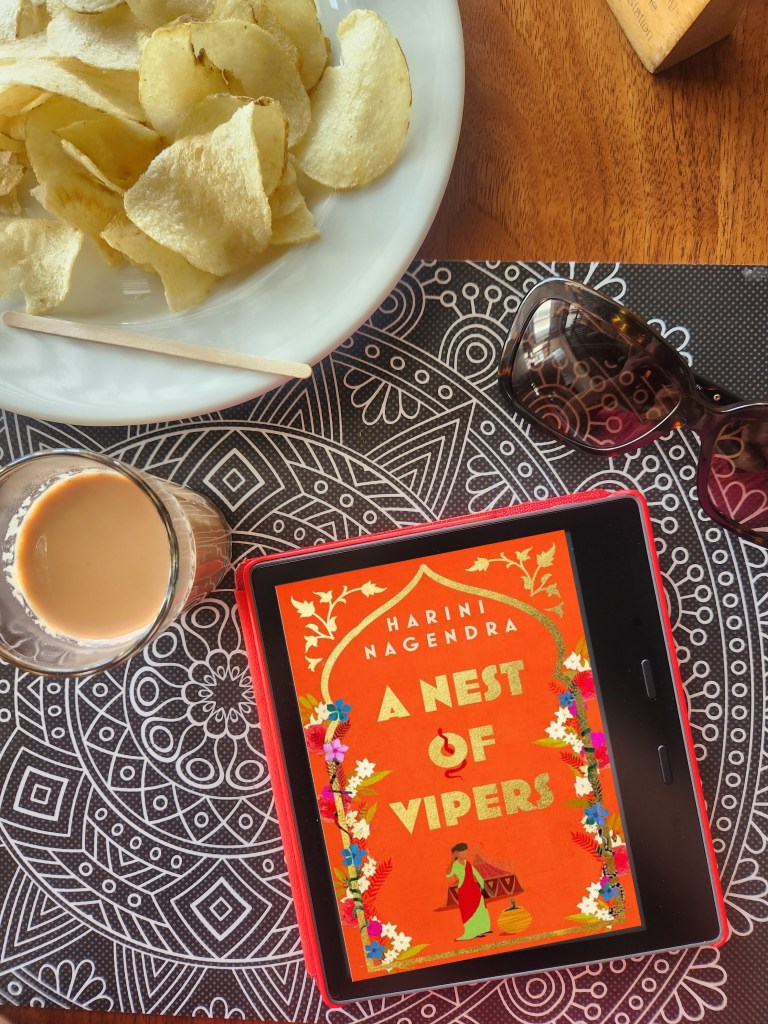
The 3rd book in the series doesn’t disappoint. Of course, there’s an interesting mystery to be solved, but I loved all the side quests the book takes us on: The struggle for independence, feminism within the time, women’s empowerment, the nod to the class and caste distinction in society, and so much more.
Kaveri’s character development is clear…she’s being more careful with her adventures and taking precautions (as she should). And her relationship with her mother-in-law has improved drastically as well. Ramu is more of a background figure supporting her. I like that the women are taking the lead and initiative here. Here’s my detailed review of the series so far: The Bangalore Detectives Club
The Mimosa Tree Mystery by Ovidia Yu

I read this book without reading the previous ones in the series and could follow the storyline, as the narration fills the gap regarding the story so far. The story takes place in Japanese-occupied Singapore. Su Lin, a young Chinese girl, has been asked by the Japanese to solve the murder of her neighbour, Mirza, who was helping the Japanese crack some codes. She has been chosen for the task because of her previous crime-solving experience with the British inspector before Japanese rule, her language skills, and her knowledge of local people and customs.
The story vividly describes the lives of locals under occupation and what they did to survive. The mystery is solved as Su Lin learns new information about her family. It is a good mix of history and crime-solving, along with a dose of family drama.
The House of Fear by Ibn-e-Safi

The House of Fear by Ibn-e-Safi is an unconventional and entertaining dive into the mystery genre. At its core is the eccentric protagonist Imran, whose seemingly nonsensical ramblings mask a razor-sharp intellect. The story begins chaotically, with Imran donning his trademark absurdity, but as events unfold, it becomes clear that beneath the madness lies brilliance.
There’s no painstakingly detailed investigative process or neatly outlined deductions; instead, we’re thrust into the narrative, following Imran’s seemingly erratic behavior as the mystery unravels. The reader is left as bewildered as the characters. It was different from anything else I’ve read in the genre.
The Acid Test by Élmer Mendoza

Prepare to dive deep into the murky world of crime, power, and corruption with The Acid Test. When Mayra, a call girl, is brutally murdered, Detective Mandieta’s quest for justice becomes personal. His determination to uncover the truth leads him into a tangled web of deceit involving the Mafia, politicians, and law enforcement—a treacherous combination that makes for an electrifying journey.
Mandieta’s investigation is met with resistance when he’s explicitly told to abandon the case, revealing a bigger and darker plot than he ever imagined. The story looks into the grim realities of power’s corrupting influence, exposing how justice often hinges on wealth and connections.
Murder in Montego Bay by Paula Lennon
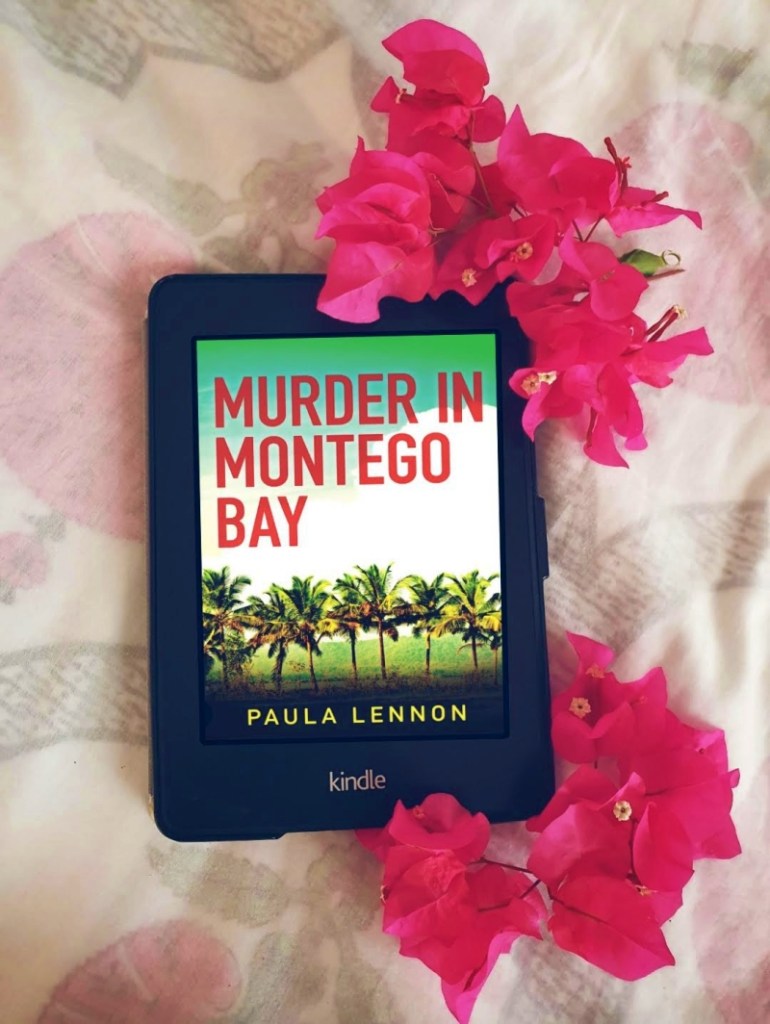
Murder in Montego Bay reads like a movie, with its vivid descriptions, engaging character dynamics, and a well-paced plot. The story expertly balances the beautiful surroundings of Jamaica with the gritty reality of a murder investigation.
Detective Preddy and his colleague Harris, two alpha males on the force, find themselves under immense pressure to solve the murder of one of the twins from the wealthiest family in town. Their resource-strapped department faces the additional challenge of maintaining credibility with the local community.
The interplay between the characters, especially the internal monologues of Detective Preddy, brings depth to the story. This series is perfect for readers who love quick murder mysteries without gruesome details.
The Hyderabad Heist Sharmishtha Shenoy
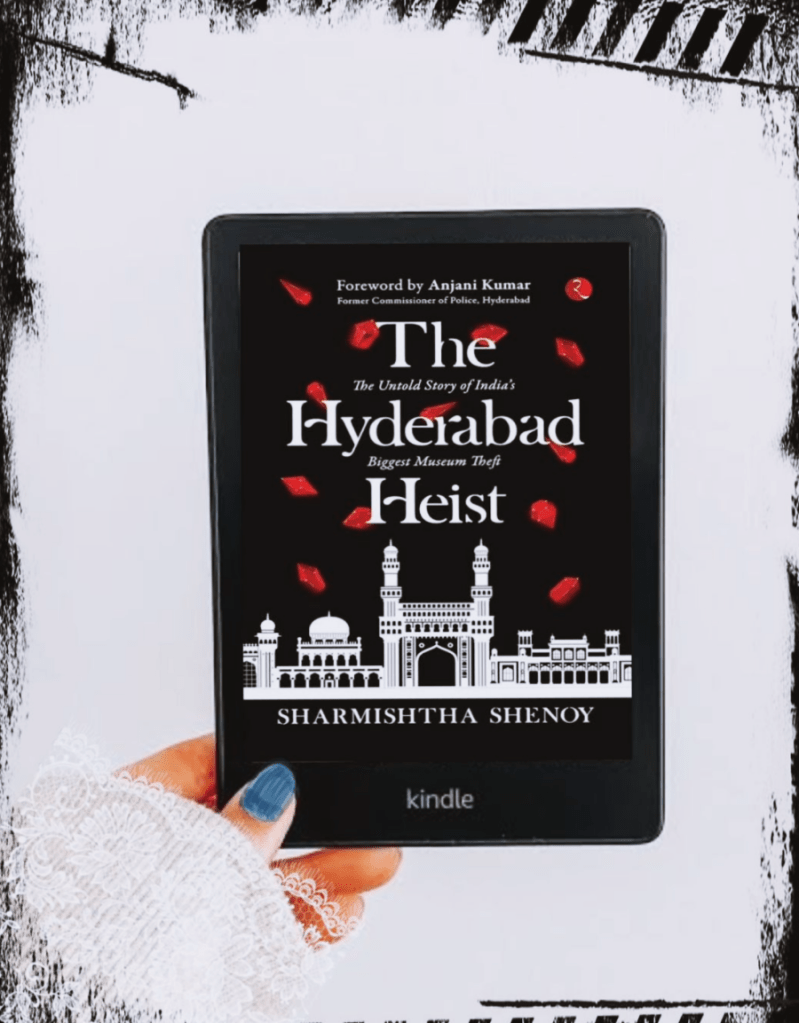
Inspired by a real-life theft that made headlines, The Hyderabad Heist by Sharmishtha Shenoy initially drew me in with its intriguing premise. Unfortunately, the novel struggles to deliver on its potential. The story feels stretched thin, like an episode of a regional TV series that’s been padded out to fill the runtime. Despite an interesting concept, the narrative lacks the depth and polish needed to sustain a full-length novel.
The pacing is uneven, and the writing could have benefited from tighter editing to keep the plot engaging. As it stands, the book fails to rise above the compelling news article it’s based on. If you’re intrigued by the heist, I’d recommend reading the original news coverage instead.
Midnight at Malabar House by Vaseem Khan
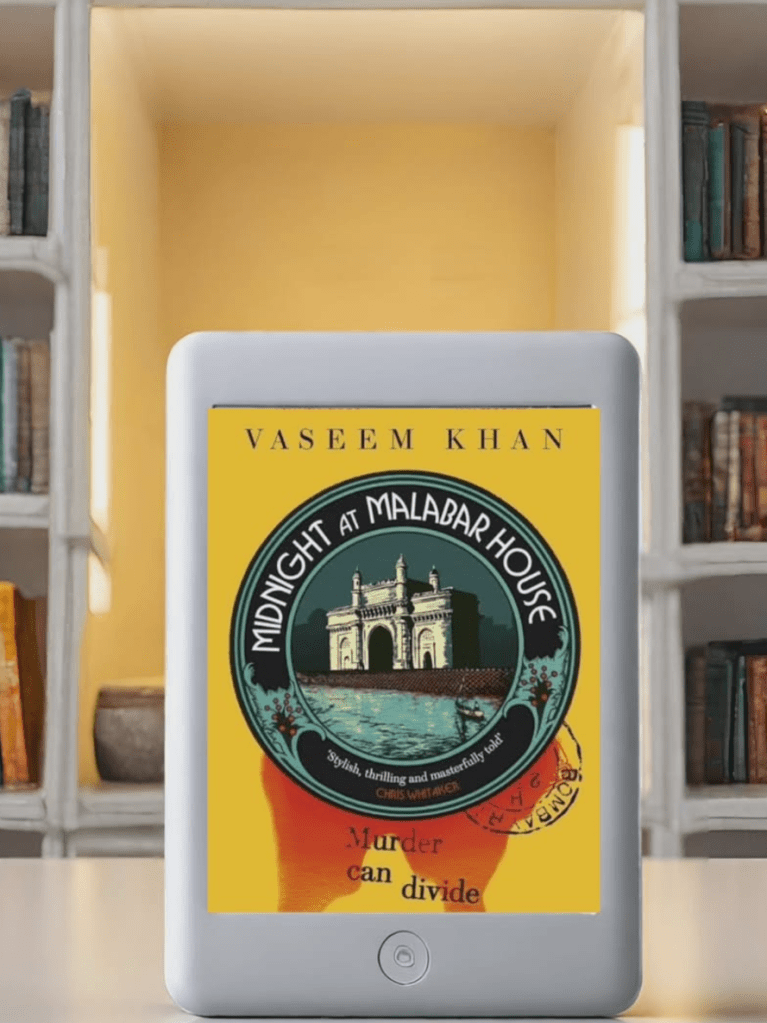
Persis is the first female police inspector in an independent India, and the media and politicos are closely following her first murder case. Her attitude reminded me of the many women who feel they need to be more aggressive to survive in a man’s world. She doesn’t hold back her thoughts and goes guns blazing at every turn.
She is investigating the murder of an Englishman who was looking into the atrocities that happened during the partition of India and Pakistan. The case becomes a political issue. The pressure is on Persis to solve the case before India’s first Republic Day. As she navigates her way through a new country, stubborn suspects, and office politics, we also learn a bit of history.
Cut Like Wound by Anita Nair

After a series of similar murder victims turn up, Gowda and his apprentice try to piece together the clues to find the killer. Gowda is dealing with his life drama on the side with his wife and son, and a reunited ex-lover.
The book starts off a little slow, introducing the characters and scenario. You can guess the killer about halfway through, but the end chapters are interesting enough to keep reading. The motive at the end seemed hurriedly explained and executed. It could’ve been handled better. The book journeys through some dark alleys of Bangalore and tries to bring the Chakka community into focus, especially the prejudice they face.
The Shape of Water by Andrea Camilleri, translated by Stephen Sartarelli

This is the first novel in the Inspector Montalbano series. Set in the fictional Sicilian town of Vigàta, the story follows Inspector Salvo Montalbano as he investigates the suspicious death of Silvio Luparello, a prominent political figure found dead in a compromising situation. Camilleri blends political commentary and vivid descriptions of Sicilian life. He describes his relationships, city, and corrupt systems, especially the presence of the mafioso within the political and justice systems. Where this book differs from other cops solving crimes is Montalbano’s moral complexity, where he’s not above bending a few rules to get his brand of justice instead of relying on the system.
Ink Black Heart and The Running Grave by Robert Galbraith
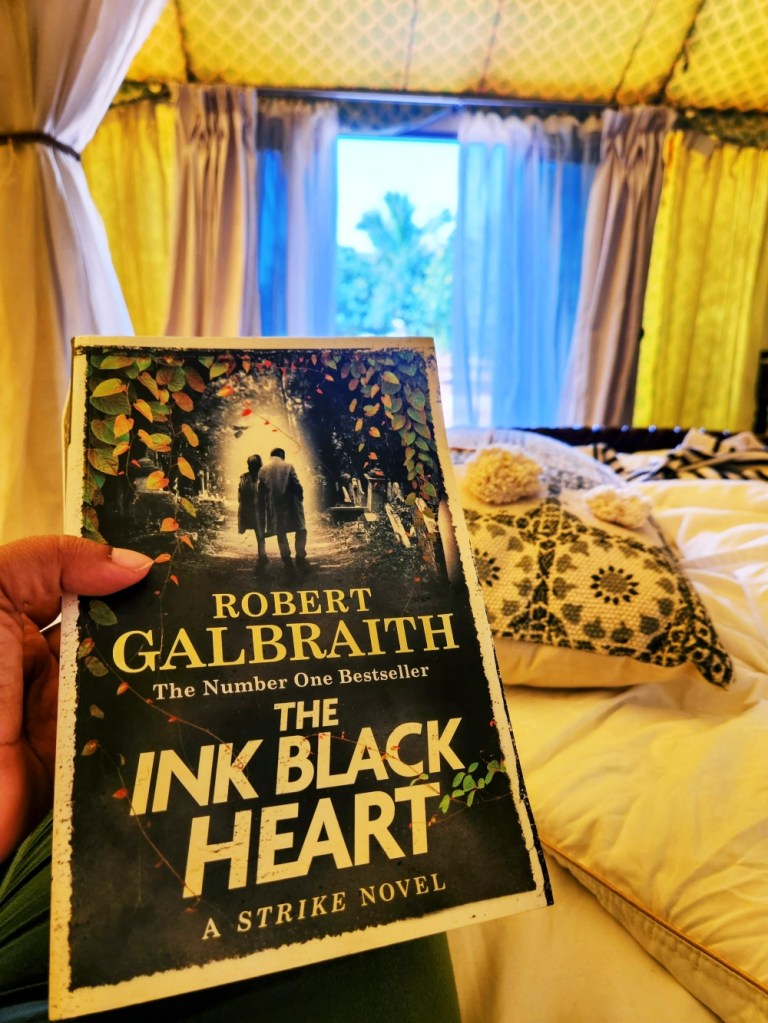
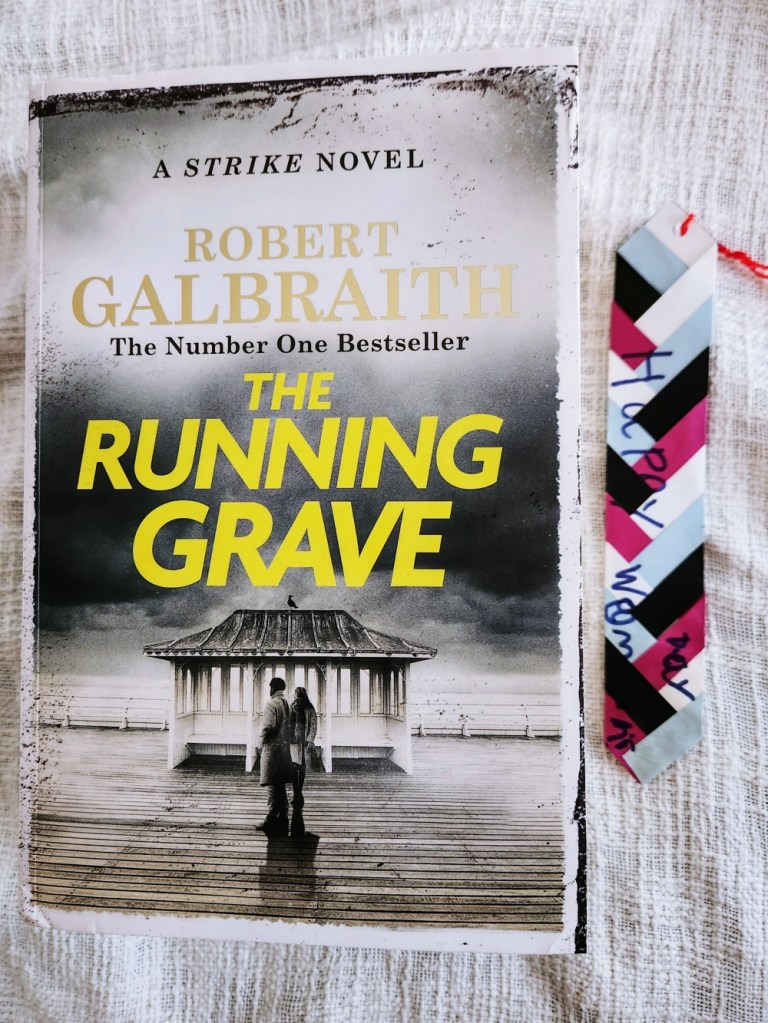
Robert Galbraith continues the series with The Ink Black Heart and The Running Grave, two distinct yet thematically connected installments in the Cormoran Strike series. Both novels showcase Strike and Robin navigating deeply layered mysteries while dealing with their evolving partnership and personal challenges.
The Ink Black Heart is a mammoth exploration of online culture, delving into the toxic undercurrents of fandoms and cyberbullying. As Strike and Robin investigate the murder of Edie Ledwell, co-creator of the cult cartoon The Ink Black Heart, they confront the anonymity of the internet and the conflicts it breeds.
In The Running Grave, the focus shifts to the shadowy world of cults and psychological manipulation. Strike and Robin infiltrate a sinister cult to uncover the fate of a missing person, exposing the vulnerabilities that draw individuals into such groups.
You could read each novel as an individual book, but you would miss out on the backstory of the characters. Both novels excel in showcasing the evolution of Strike and Robin’s dynamic, blending personal stakes with their professional endeavors.
The Missing American by Kwei Quartey

Internet scams have become far more advanced than the original Nigerian Prince emails that started it all. The book is set in Ghana, where a group known as the Sakawa pays homage to fetish priests to gain the power to deceive people over the Internet.
Emma is an aspiring young police officer whose career ambitions are cut short because of men in power who abuse their positions. But she’s thrown a lifeline to join a private investigation firm where there’s no room for the corruption that has taken over the Ghana police force.
They are hired to find an American man who has gone missing in Ghana. He was there to learn about the Sakawa boys after having been duped by them, but when his son doesn’t hear from him in a long time, he arrives in Ghana to investigate. The story takes us into the murky world of internet scams, how they’re perpetuated, the people who do it, and the people who profit from it.
The Portrait of a Secret by Tarun Mehrishi

It takes a few chapters to understand the flow of the story as it quickly flits between points of view on different timelines, but it gets interesting very soon. The story picks up on an actual incident of stolen paintings but fabricates the rest of it. It is an interesting premise, and towards the end, the game gets quite riveting as the paintings find their way back to the Indian Govt, and a big terrorist plot gets foiled because of it. For those who like spy thrillers and political intrigue, this is one of the better ones in the Indian context.
The Emperor’s Ring by Satyajit Ray

The Feluda series reminds me of the Famous Five series. It’s great for young readers but interesting enough for adults as well. The Emperor’s Ring is the first in the series, although there are many shorter stories as well.
Feluda and Topshe, his young sidekick, are in Lucknow when a precious emerald ring goes missing. Following the clues with a sharp eye, Feluda deduces the culprit, but can they escape the danger unharmed? The stories are good fillers when you’re in between books!
A Man by Keiichiro Hirano, translated by Eli K.P. William
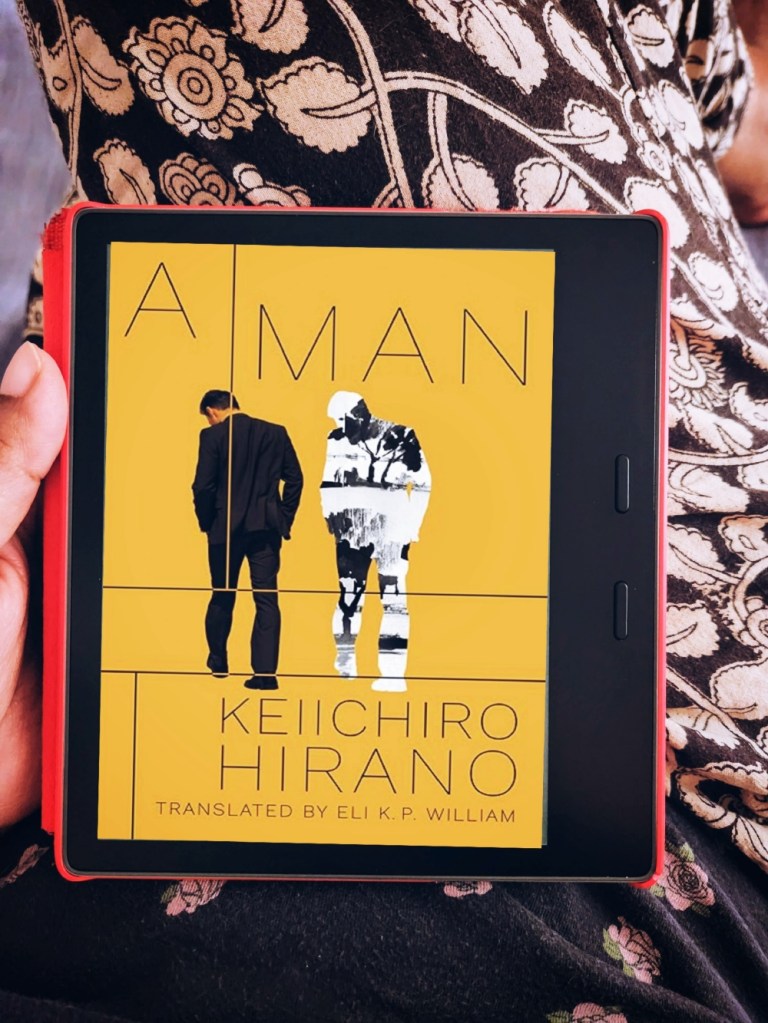
A Man is a mystery book with many layers. Kido is a lawyer who is tasked with finding out the true identity of a dead man and the person he was impersonating. The book gives us an insight into Japanese society, the cultural racism, the existential dread after surviving natural disasters, family dynamics, and so much more.
The concept of trading identities sounds dystopian, but it also makes you think like Kido – would someone else live your life better than you? Or, would you live a better life as someone else? This is not a book to read in a hurry. Savour it as you ponder on some of the experiences and questions that come up.
You’re Invited by Amanda Jayatissa

Amaya seems like any jealous woman trying to stalk her once best friend who is now social media famous! After not having spoken with Kaavi for years, she’s surprised to find an invitation to her wedding to Amaya’s ex-boyfriend.
We are led to believe that she has to go to the wedding in Columbo to stop the wedding out of spite. But as we learn more about the friends’ history, something doesn’t sit right. We know that Kaavi, the bride is missing under suspicious circumstances on her wedding day, and investigators are trying to find her. Somewhere in the middle of the book, we are told some of the secrets, which is when things start to get really interesting. It gets fast-paced toward the end as all is revealed.
Nobody Killed Her by Sabyn Javeri

To be a woman with ambition can be difficult in a country where women are regarded as second-class citizens. Rani Shah had the audacity to want to become the leader of the country, and for that, she was murdered. Her second in command, Nazo, was the one who pushed her to do better and took the hard decisions when Rani couldn’t. And for that, she was sidelined and underestimated. Now she’s on trial for the murder of her boss.
It is a good premise, with the storyline highlighting some of the social and personal evils prevalent in society today, especially in South Asia. However, the writing feels rambling at times, and there’s a lot of repetition and plot holes. Nevertheless, a good read.
A Thousand Rooms of Dreams and Fear by Atiq Rahimi Translated by Sarah Maguire & Yama Yari

We meet Farhad, who is flitting between the waking world and unconsciousness. There’s a woman he doesn’t recognize, and her son calls him father. We learn the city is Kabul in Afghanistan. Through the short narrative, we discover the events that led him to where he is.
Having narrowly escaped death at the hands of soldiers, he realises his carefree days of youth are over, and he needs to make some tough decisions. We see him yearn for his mother, but at the same time, he’s worried about how anxious she would be.
It is not definite what happens to him at the end; that is something for the reader to conclude. We follow his inner turmoil and the political unrest Kabul is facing. He knows he is not the first nor the last to undergo such torture and wonders if it would be best to just end it all.
Drive Your Plow Over the Bones of the Dead by Olga Tokarczuk, translated by Antonia Llyod-Jones

It is a thought-provoking novel that brilliantly mixes elements of mystery, eco-criticism, astrology, and philosophical musings. It takes a very different approach to the murder mystery genre by focusing on everything but the actual murder investigation.
Set in a remote Polish village, the story is narrated by the eccentric Janina Duszejko, an elderly woman who is deeply immersed in astrology, poems of William Blake, and the natural world. She bemoans the loss of her dogs and the rampant hunting in the forests.
When her neighbour Big Foot is found dead, Janina and her friends find themselves at the center of a series of mysterious deaths among the local hunting community. As the bodies pile up, she becomes convinced that the animals are taking revenge on the hunters. Her theories, dismissed by the authorities as the ramblings of a madwoman, lead her to conduct her own investigation, unravelling a web of secrets and hidden motives.
The Good Son by You-Jeong Jeong, translated by Chi-Young Kim
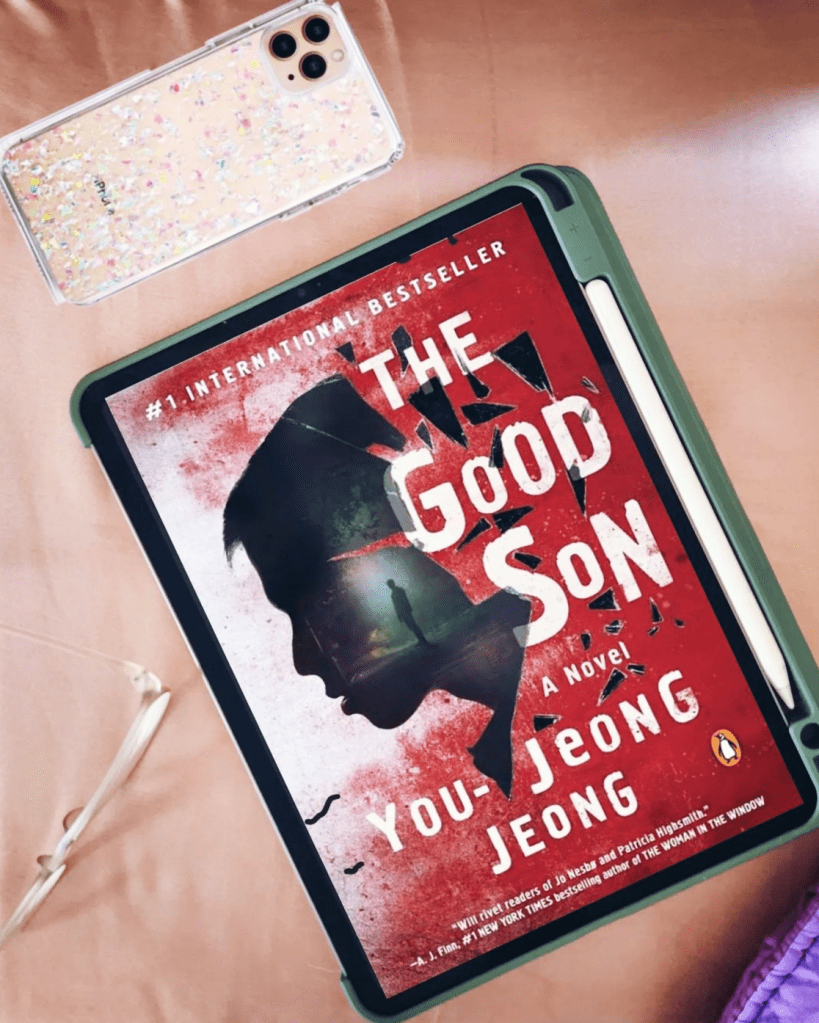
The scariest stories are not about made-up monsters but evils that hide in plain sight. When Yu-jin wakes up covered in blood and finds his mother murdered, he needs to piece together the events of the night before. He needs to keep curious people at bay before he can figure out what happened and what he needs to do.
He finds his mother’s journal and realises a big part that was missing from his life finally makes sense. His anger and resentment grow as he recollects events from the past.
The way the story ends is chilling.
The story-telling could be better. The journal entries seemed more like explanations rather than journal writing. The revelations seem too convenient and timely. However, it gives you fodder to think about.
A Perfect Crime by A Yi, translated by Anna Holmwood
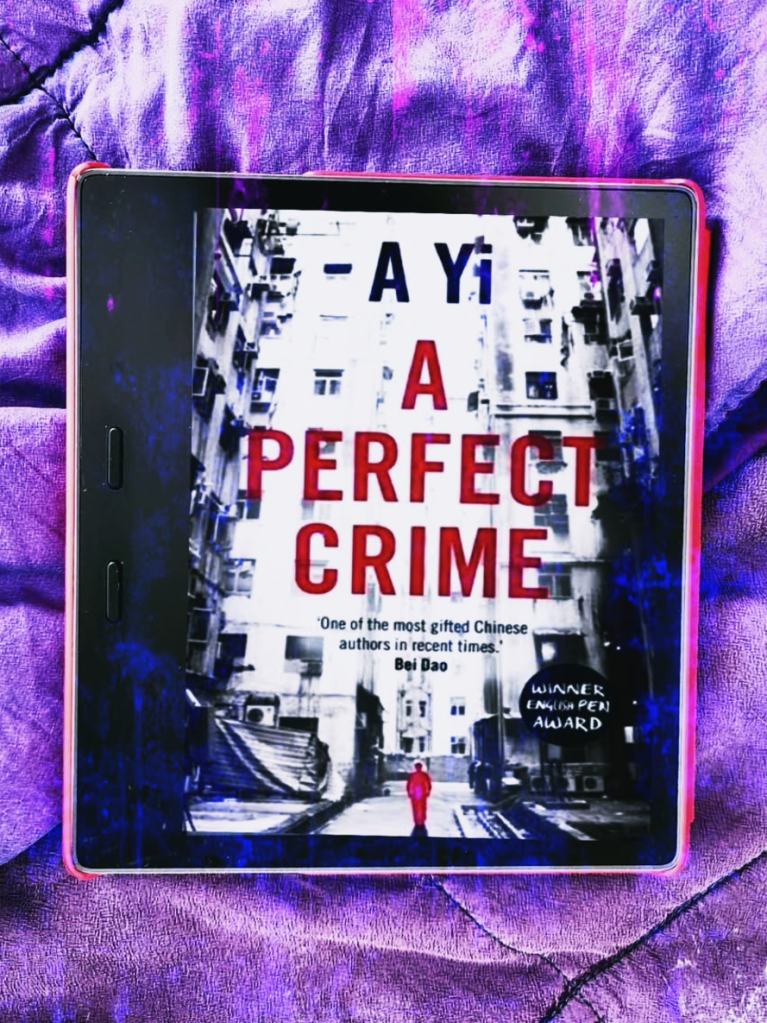
The crime is committed pretty early on in the book and we know who did it. We go through the inner voice of the murderer – his life, his reasons, and his thoughts. It is chilling the way he describes his lack of emotions, although he would’ve felt it somewhere deep since the act made him vomit. We get a glimpse of the conditions of the society he is in, his family situation, and how they change and react to the crime. It is not a murder mystery but more of a psychological analysis of a killer.
The One Legged by Sakyajit Bhattacharya, translated by Rituparna Mukherjee
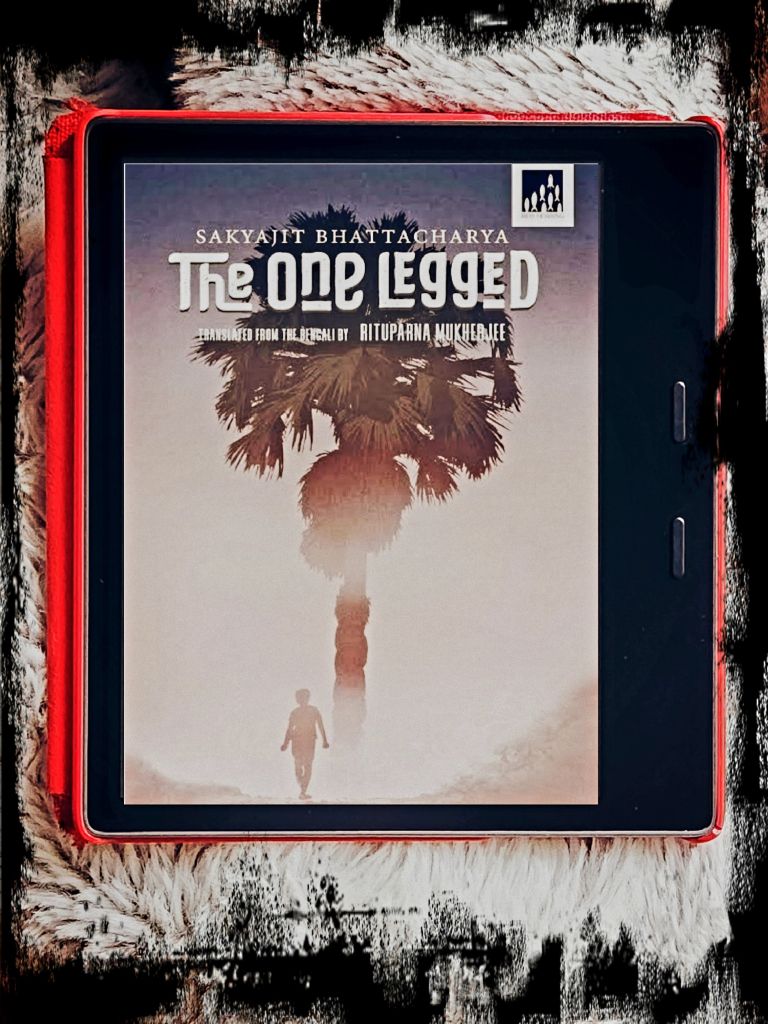
The slow, descriptive pace of this novel carefully builds suspense while painting a vivid, cinematic picture. The setting, the build-up, and the climax are masterfully executed, drawing you into a world where reality and myth collide seamlessly.
The story follows nine-year-old Tunu, sent to spend his holidays in a crumbling rural Bengal mansion with his grandparents. The house is steeped in grief and haunted by memories of Tunu’s uncle who vanished twenty years ago. His grandmother, Dida, clings to the past, leaving offerings at the palm tree where the mythical one-legged ghost, Ekanore, is said to dwell.
The myth of Ekanore feels less like a tale and more like a tangible threat when a toddler from the servant couple goes missing. The climax is breathtaking, revealing long-buried secrets that redefine everything you thought you understood about the story.
This novella explores the psyche of a lonely young boy and delves into themes of jealousy, neglect, and the human need to belong. It also examines the shadows cast by casteism, classism, superstition, and poverty, painting a chilling picture of societal dynamics in rural India.
If you want to explore my reading list in the genre, here are the book lists I’ve posted so far:
The Thrilling World of Mystery: Exploring the Best Thriller Novels from Around the Globe:
Reading Challenge 2024:
Note: Some links are part of an affiliate program, which means that if you click on a link and buy something, I might receive a percentage of the sale, at no extra cost to you.




 Love, Life, & Beyond
Leave a comment